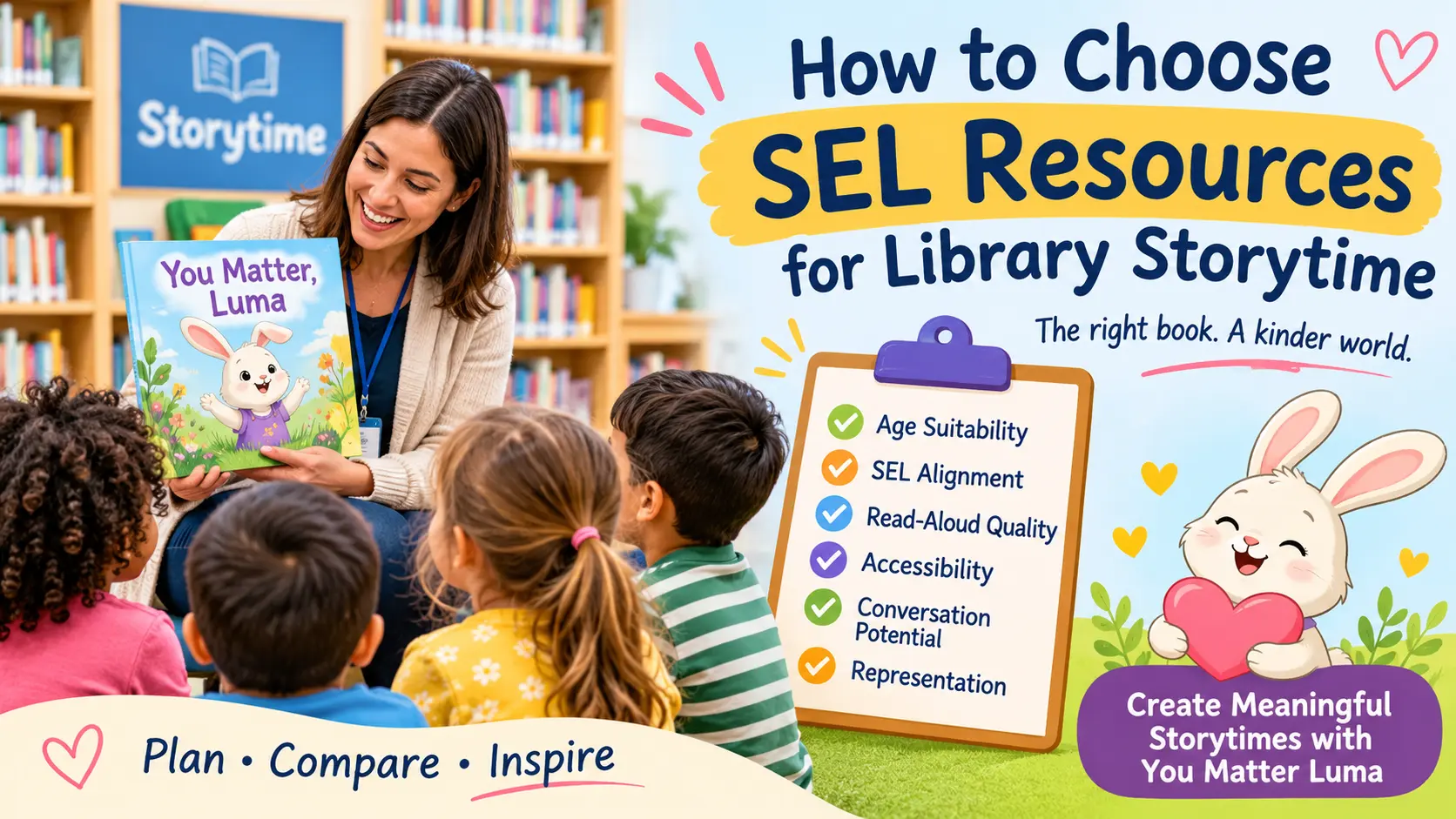
Choosing social-emotional learning resources for library storytime is not quite the same as choosing a classroom read or a bedtime book. You are planning for mixed-age groups, short sessions, and children who may show up once or every week. You Matter Luma helps children explore self-worth and belonging through story, and resources like it work well when matched to a library setting. Below you will find a practical checklist, a blank comparison worksheet, and a sample belonging activity you can try at your next session.
Before you browse catalogs, clarify four things about your program.
Age range and group composition. Identify the ages your session will serve. Note whether your sessions lean toward younger toddlers or older preschool-and-up children, since vocabulary and emotional depth should match.
Session format. Time your practice reading and activity. Leave room for questions and transitions.
Budget and acquisition path. Will you purchase, borrow through interlibrary loan, or request a donated copy? Free downloadable activity guides can stretch your programming budget.
Intended SEL focus. Decide which skill to explore: emotional strength, belonging, kindness, or empathy. A clear goal helps you compare resources instead of browsing for “something about feelings.”
Run through these eight criteria when evaluating a storytime resource. Not every item carries equal weight, but reviewing all eight helps you choose with confidence.
Copy this worksheet for each shortlist. Record verified details and mark unknowns for follow-up. Check evidence separately from theme alignment: addressing empathy does not establish effectiveness or CASEL approval.
| Criteria | Resource A | Resource B | Resource C |
|---|---|---|---|
| Age suitability | |||
| Read-aloud quality | |||
| Preparation time | |||
| Accessibility | |||
| Cost and permissions | |||
| SEL alignment | |||
| Conversation potential | |||
| Representation | |||
| Overall notes |
This is a proposed activity, not a tested intervention. Adapt it freely to fit your group.
Materials: One copy of You Matter, Luma by John R. Miles, blank paper, crayons or markers.
Theme: Belonging and self-worth.
Steps:
“What is one kind thing someone did that made you feel like you belonged today?” This extends the conversation beyond the library without formal follow-up. You Matter Luma’s SEL activities for kids offer additional discussion ideas for future sessions.
After comparing your options, pick the resource that fits your program’s needs. Run one or two sessions, then gather informal feedback from the children and caregivers who attended.
Ask children, “What part of the story do you remember most?” For caregivers, a short comment card can reveal whether the session sparked conversation at home. These observations help you refine future choices without claiming to measure emotional development.
Over time, tracking which resources spark the most engagement helps you build a working resource list. Exploring why belonging matters for children can also deepen your understanding of the themes your young visitors respond to most.
Library storytime may serve mixed-age, drop-in groups. A classroom SEL curriculum may extend across sessions. Librarians choose resources that stand alone within a single visit.
No. A carefully chosen picture book and a few open-ended questions are enough. Follow library policies. Distinguish an informal activity from a complete curriculum or therapeutic service.
Look for a clear connection to a specific skill such as empathy or self-awareness. Resources that mention feelings without exploring them through character experience may not go deep enough. Use the checklist above to evaluate each title.
You Matter, Luma is a picture book for ages four to eight that explores self-worth and belonging through the story of Luma the Bunny. Preview the book and time your reading to check its fit.
Ask children which part of the story they remember or whether they would like a similar book next time. A brief comment card or verbal check-in with caregivers helps you improve future sessions for program improvement. Follow library privacy policies.