Raising a confident, caring child takes more than good grades or good habits. Kids also need to understand what they feel, get along with others, and think before they act. That combination is at the heart of social-emotional learning for kids, a focus that more families and schools across the United States have started paying attention to.
The goal is simple: give children tools to handle everyday situations and build real connections with the people around them. This guide from You Matter Luma looks at what social-emotional learning actually involves, along with a few practical SEL activities parents and teachers can try.
At its core, social-emotional learning, or SEL, is about teaching children to notice their own emotions, understand what other people might be feeling, speak up clearly, form good relationships, and make decisions they can stand behind.
None of this happens overnight. It builds slowly, through ordinary moments at home, in the classroom, and out in the world. A disagreement with a sibling, a new friendship, a tough day at school. Each one is a small chance to practice.
SEL is different from a typical school subject. There is no test at the end. Instead, it centers on how a child grows as a person, starting with the idea that feelings are normal and that expressing them in a healthy way tends to lead to better relationships over time.
Kids run through a lot of emotions in a single day. Excitement over a project, nerves before something new, frustration when plans fall apart. Without some guidance, sorting through all of that can be hard for a child to do alone.
That is part of why social-emotional learning for kids matters so much right now. Children who get comfortable naming their emotions often communicate more clearly and handle disagreements without falling apart. Many also become more willing to try new things, since they start to see a hard moment as something to learn from instead of something to avoid.
There is a classroom benefit too. Students who can cooperate and manage their reactions tend to focus better and work well in groups. At home, the same skills often show up as calmer conversations and fewer blowups over small things.
Above all, SEL sends children a simple message: their feelings are valid, and asking for help is not a weakness.
Most SEL frameworks are built around five skills. Self-awareness comes first, and it simply means a child can recognize what they are feeling in the moment. That recognition tends to make it easier to talk about emotions instead of bottling them up.
Self-management is next. It covers things like staying calm under stress, waiting a turn, or not reacting the second frustration hits.
Social awareness is about noticing what other people are going through. As empathy grows, children start to consider other points of view and treat people with more patience.
Relationship skills round out the practical side. Listening, cooperating, being honest. Kids build these with siblings, classmates, and teachers, and the trust that comes from it tends to carry into adulthood.
Last is responsible decision-making, which is really just pausing to think about how a choice affects other people before making it.
None of this requires a formal lesson plan. A lot of the best learning happens in ordinary moments. Reading together is one of the easiest starting points, since stories put children inside someone else’s feelings. Asking a simple question, like why a character made a certain choice, can open up a real conversation.
Emotion check-ins work well too. Something as small as asking a child to describe their day in one feeling word can show them that every emotion is worth mentioning, not just the big ones.
Practicing everyday situations through role-play, like asking for help or introducing themselves, gives kids a low-stakes way to prepare for the real thing. Drawing, storytelling, and imaginative play serve a similar purpose for children who do not yet have the words for what they feel.
Small acts of kindness matter here too. Helping a classmate or writing a short thank-you note reinforces that kindness tends to strengthen relationships rather than cost anything.
Looking for an easy way to start these conversations at home?
Parents are usually a child’s first teacher in this area, often without realizing it. Something as ordinary as listening without interrupting during dinner or a car ride can make a child feel heard.
Kids also pick up a lot just from watching. When a parent talks through their own frustration calmly instead of losing their temper, that example tends to stick.
It also helps to notice effort over outcome. A child who understands that mistakes are part of learning is usually more willing to try something new, rather than avoiding it out of fear of getting it wrong.
Teachers carry a good share of this work too. A classroom where every student feels included tends to see more participation, plain and simple.
Group projects and open discussion give students room to practice listening and working through disagreements together. When a teacher notices and points out small acts of kindness, it tends to set a tone that the rest of the class follows.
Over time, when SEL becomes part of the regular school day rather than a separate lesson, students tend to be better prepared both socially and academically.
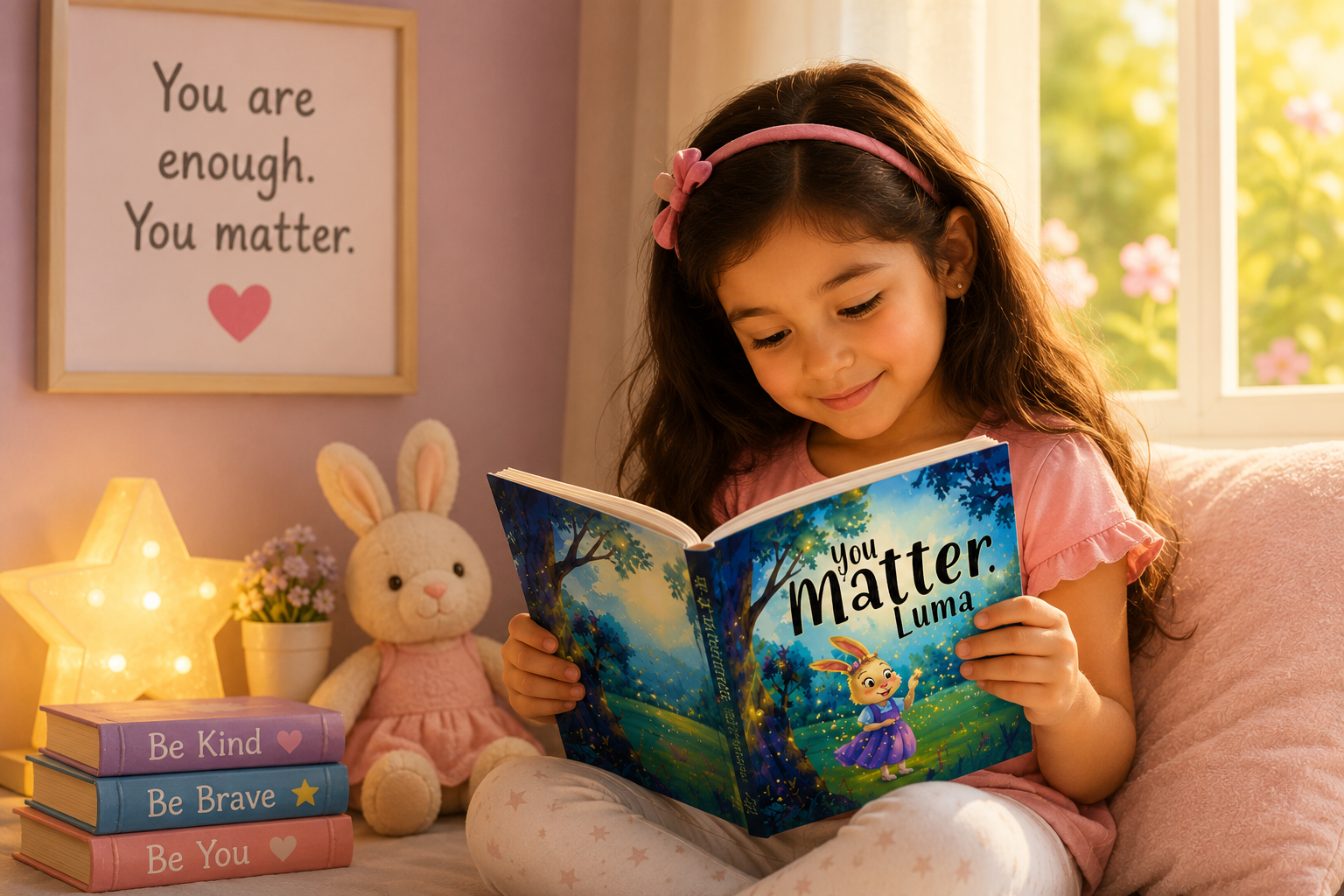
Stories have a way of teaching emotions without it feeling like a lesson. You Matter Luma builds on that idea, using stories that touch on kindness, empathy, belonging, courage, and self-worth.
The character at the center, Luma the Bunny, is meant to open the door to real conversations between kids and the adults reading with them. Rather than spelling out a moral, the stories leave room for a child to talk through what they noticed or felt.
Some families use the books at bedtime. Some teachers bring them into the classroom to start a discussion about friendship. Either way, paired with small SEL activities during the day, the goal is the same: helping a child feel capable just as they are.
Ready to bring these stories into your home or classroom?
Building social-emotional learning for kids into everyday life is one of the more meaningful things a parent or teacher can do. Awareness, empathy, and the ability to make thoughtful choices tend to carry a child well beyond the classroom. Through open conversation, a few simple SEL activities, and resources like You Matter Luma, families and educators can give children a real head start on understanding themselves and the people around them.
It is the process of helping children understand their emotions, build relationships, communicate clearly, and make thoughtful decisions in everyday situations.
SEL tends to support a child’s emotional well-being, improve how they communicate, and help them handle challenges at home and school with more patience.
Reading together, talking through emotions, role-playing everyday moments, and encouraging small acts of kindness are all simple starting points.
Listening without judgment, talking openly about feelings, and modeling calm, respectful behavior are some of the most practical ways parents can support this at home.
Through stories featuring Luma the Bunny, the series gives children a way to explore kindness, empathy, and self-worth, while opening up conversations with the adults reading alongside them.