Parents always want to know whether their children are happy in the inside world, aside from grades on report cards. The reality is that sometimes emotional intelligence can be found in simple, small situations long before it gets manifested elsewhere. And one of the easiest and most efficient ways to develop emotional intelligence is by using children’s books about emotional intelligence to model feelings for children.
For instance, when seeking ways to start, You Matter Luma provides such an option. The series, written by author John R. Miles, involves characters of Luma the Bunny and her friends from the forest who go through stories on topics of fear, worries, belonging, and self-doubts, helping young listeners put names to their feelings.
Emotional intelligence doesn’t mean that a child should always be composed and never cry or get upset. Rather, it is the capacity of a person to recognize emotions, understand what these emotions are and how to properly react to them without letting this situation escalate.
It can manifest itself through stopping right before the tantrum starts, rather than starting right away for a five-year-old child, or showing concern to a friend who may seem unhappy for a nine-year-old child.
Spotting the signs of emotional intelligence in kids allows the parent to see where their child is strong and where maybe a bit more guidance is needed. Look for the following traits:
Children do not need to display all of these traits at one time. The development of emotions occurs sporadically rather than in a linear pattern.
Emotional awareness in children can be seen in everyday activities, not during a therapy session. Observe your child when he or she experiences losing in the game, cancellation of a playdate, or attention from parents going to the younger sibling. Children with developing emotional awareness will feel upset and will eventually calm down with a little help, unlike children without it who remain upset for a long time.
Furthermore, they will start talking about their emotions without prompting from adults, which is another way of identifying that the child has developed the skill. He or she will say “I’m nervous about my spelling test” independently without asking about feelings and take a breath when getting frustrated before starting to cry. Unprompted comments are important, as they mean that the skill is already forming and not something the child will show after prompting from an adult.
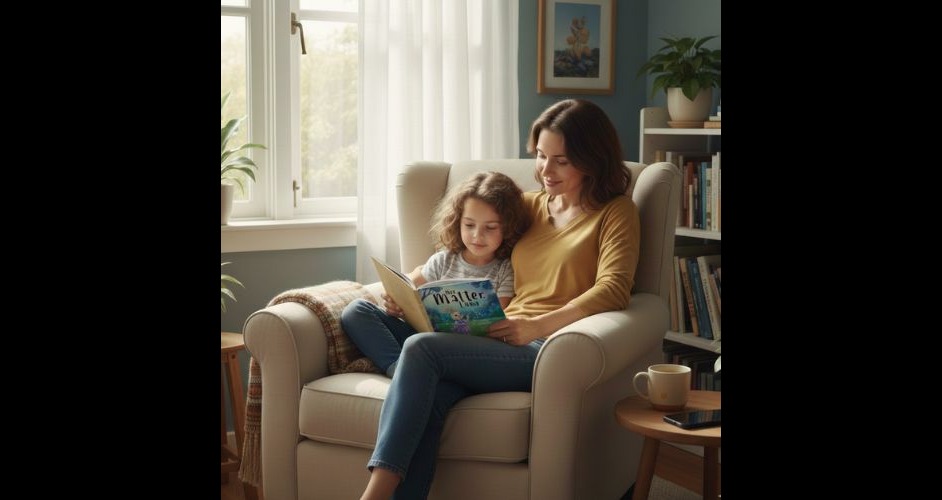
Through stories, kids can experience strong emotions from afar. In this way, when a character on the page experiences fear or isolation, a kid can work through those emotions without actually experiencing them themselves right then and there.
This is precisely why the children’s books about emotional intelligence are so valuable for parents, educators, and therapists. A good story helps a kid name emotions that they may not know how to describe yet and allows them to develop an emotional vocabulary slowly but surely.
It is crucial for preschoolers to learn through games and activities, and not through direct teaching. Some of the emotional intelligence activities for preschoolers that go well with story time are:
Such little activities will be much better for developing emotions than any kind of lecture can ever be.
It may be difficult to choose an appropriate kids’ emotional intelligence book with such a wide range of choices available in the market today. You should look for books with stories where a character does not have it easy and all their feelings are not resolved within just three pages.
One such set of books is called the You Matter Series, which represents a good example of books for emotional learning for children. The books are written specifically for children aged 4 to 8, telling the story of Luma the Bunny, who goes through ten stories, each of them touching on a different emotional issue:
Each story helps to start a meaningful dialogue at bedtime.
Emotional intelligence cannot be nurtured through just one talk; rather, it is developed through many conversations, most initiated by an open book on a child’s nightstand. If you are ready to provide a story in your child’s collection that will nurture their emotions in a kind and sincere way, You Matter Luma would be the best choice.
The book is written by John R. Miles, who transformed his own childhood memories of not being noticed into stories reminding children that their value was never earned. This is another wise step for any family creating its home library full of books on emotional intelligence for children.
Want to begin the talk tonight? Buy your copy of You Matter, Luma now!
The recommended age for introducing such books is around two or three years old. This age is chosen because by this age, children have experienced a range of emotions, although they may lack the terms to express them. It is a great way to teach them from an early age.
Of course, it is a normal situation because understanding and managing a feeling are different things. Usually, it develops much later than the former, sometimes even during elementary school. Do not consider having a tantrum as a regression but rather see it as an indicator that your child is learning a skill that needs many years of practice.
The key to success is consistency, not frequent reading. It means that you should spend some time reading these books several times per week, accompanied by discussion, not once a week, and spend lots of time; also, repetition of one book will also help.
Yes, definitely! There is nothing gender-specific about emotional intelligence, and children of all genders need examples of characters being honest about their fears, sadness, or concerns. Boys actually have less opportunity to get such examples, which makes these books especially important.
It is perfectly alright, as trying to force discussion could be counterproductive. Let some time pass and see if the child starts discussing the feelings of some characters by himself when similar things happen to him. You can also show an example by discussing your own feelings regarding some character.