

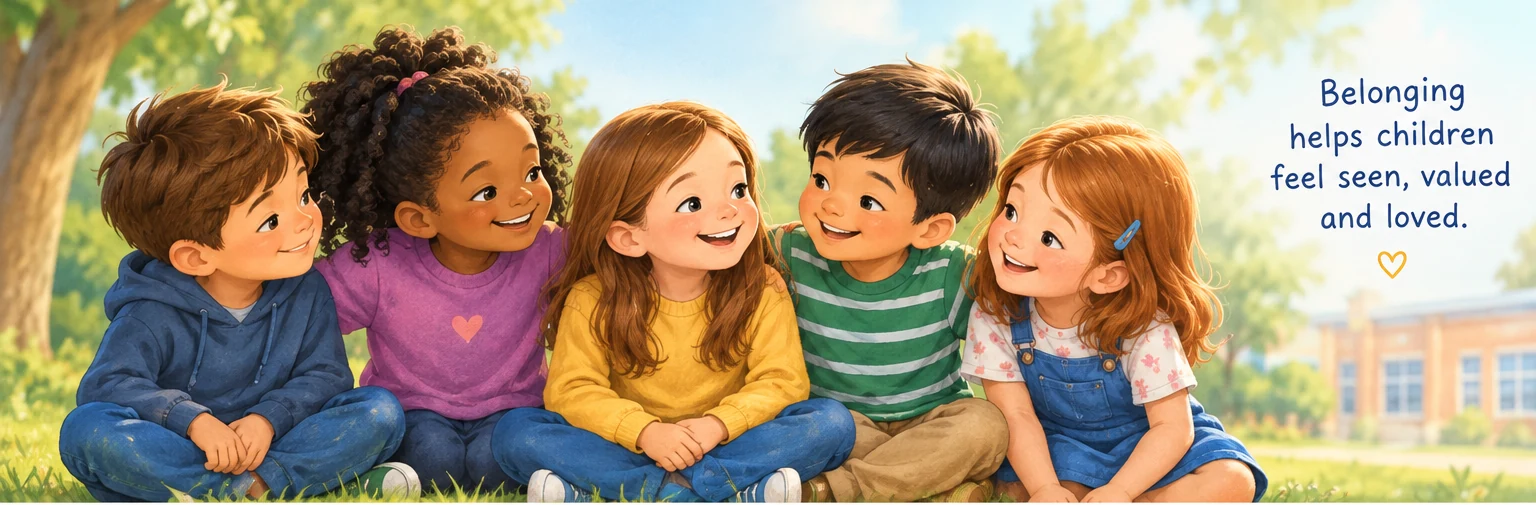
Every child wants to feel accepted, understood, and loved. Whether they are playing with friends, joining a classroom activity, or spending time with family, children need to know that they have a place where they belong.
Belonging for children means feeling accepted, included, and valued for who they are. It helps children understand that they matter, that their feelings are important, and that they do not have to change who they are to deserve friendship and care.
For young children, especially those between the ages of 4 and 8, belonging can shape how they see themselves and relate to the world around them. A welcoming classroom, a caring conversation, or a friend who invites them to play can make a meaningful difference in how included they feel.
But what happens when a child feels left out? How can parents and educators help children build meaningful connections? The good news is that belonging does not require grand gestures. It often begins with small, everyday moments that help children feel safe, noticed, and appreciated.
Let’s explore why belonging matters for children and how you can help every child feel that they have a place in the world.
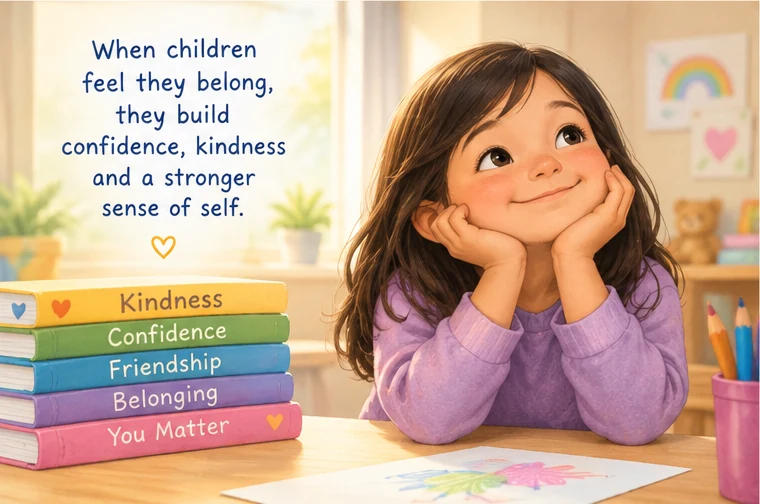
Belonging is the feeling of being accepted, included, and connected to other people. For children, it means knowing they are valued members of their family, friendship groups, classrooms, and communities.
A child who feels a sense of belonging understands that they can be themselves without constantly worrying about being rejected or excluded.
Belonging does not mean that every child must have the same interests, personality, or abilities. Instead, it teaches children that differences are natural and that everyone deserves kindness and respect.
For a young child, belonging might look like:
These experiences help children recognize that their presence matters.
When children feel they belong, they can begin to develop a stronger sense of self-worth, build healthier relationships, and approach new experiences with greater confidence.
Belonging is an important part of children’s emotional and social development. Feeling connected to caring adults and supportive peers helps children navigate challenges, express themselves, and build positive relationships.
Here are five important ways belonging can support children’s growth.
Children gradually form beliefs about themselves through their experiences and relationships.
When adults listen to them, include them in decisions, and show interest in their thoughts, children receive an important message: I matter.
These everyday experiences can help children understand that their worth does not depend on being the smartest, funniest, most talented, or most popular person in the room.
A child who feels valued can begin to recognize that they deserve kindness and respect simply because they are a person with feelings, needs, and individuality.
Parents can nurture this understanding by reminding children that their opinions matter, their emotions deserve attention, and mistakes do not make them less valuable.
For more practical guidance, explore our article on how to build self-worth in children with 10 simple strategies parents can use.
Trying something new can feel intimidating for a young child.
A child might hesitate to join a game, answer a question in class, or introduce themselves to another child because they are afraid of being rejected.
When children feel accepted, they have a supportive foundation from which to explore unfamiliar experiences.
They begin to understand that they do not have to be perfect to be included and that they can learn, grow, and make mistakes without losing their place in a group.
Parents and teachers can encourage confidence by celebrating effort, welcoming questions, and creating opportunities for children to participate at their own pace.
For example, instead of pressuring a shy child to speak in front of everyone, a teacher might invite them to share an idea with a partner first.
Small, supportive steps can help children feel more comfortable expressing themselves.
Learn more about how to build confidence in kids through everyday encouragement and positive experiences.
Children learn about relationships by observing how people treat one another.
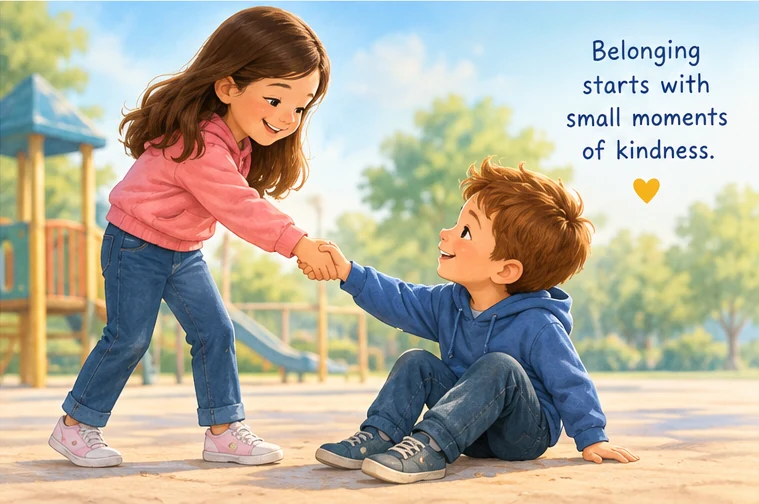
When children experience inclusion, they have opportunities to understand what acceptance feels like. With guidance and practice, they can begin to extend that same consideration to others.
For example, a child who notices a classmate sitting alone might learn to ask, “Would you like to play with us?”
This simple invitation can become an opportunity to practice empathy, recognize another person’s feelings, and make someone feel welcome.
Parents and educators can encourage these behaviors by asking questions such as:
These conversations help children think beyond their own experiences and consider the feelings of others.
Belonging and empathy can reinforce each other: children who experience thoughtful inclusion have opportunities to practice including others.
For more ideas, explore our guide to teaching kids kindness and empathy through picture books.
Children experience many emotions as they grow. They may feel excited about making friends one day and worried about fitting in the next.
Feeling connected to trusted adults and supportive peers can help children navigate these experiences.
When children know they have someone who will listen without immediately judging or dismissing their feelings, they may find it easier to talk about worries, disappointments, and conflicts.
For example, a child who was not invited to join a game might feel sad or embarrassed.
Rather than saying, “Don’t worry about it,” a parent could respond:
“I can understand why that hurt. It feels upsetting when you want to play with someone and they don’t include you.”
This response acknowledges the child’s feelings and creates an opportunity to discuss what happened.
It also teaches an important lesson: difficult emotions are part of being human, and children do not have to face them alone.
Belonging does not eliminate loneliness, disappointment, or friendship difficulties. Instead, supportive relationships can help children feel more equipped to work through these experiences.
Understanding feelings is also an important part of emotional development. Our guide to social-emotional learning for kids explains how children can develop skills for recognizing emotions, building relationships, and making thoughtful choices.
Children may notice differences in appearance, abilities, family structures, interests, languages, and ways of communicating.
Without thoughtful guidance, they may struggle to understand why someone behaves differently or enjoys different activities.
Adults can help children learn that differences are a natural part of life and that people don’t have to be alike to treat one another kindly.
For example, a teacher might explain that some children enjoy speaking in front of a group, while others prefer listening or sharing their thoughts in smaller groups.
Both children can contribute meaningfully.
Parents can reinforce this lesson by choosing stories with diverse characters, discussing different family experiences, and helping children recognize that everyone has something valuable to offer.
The goal is not to teach children that differences never create challenges. It is to help them approach those differences with curiosity, respect, and compassion.