

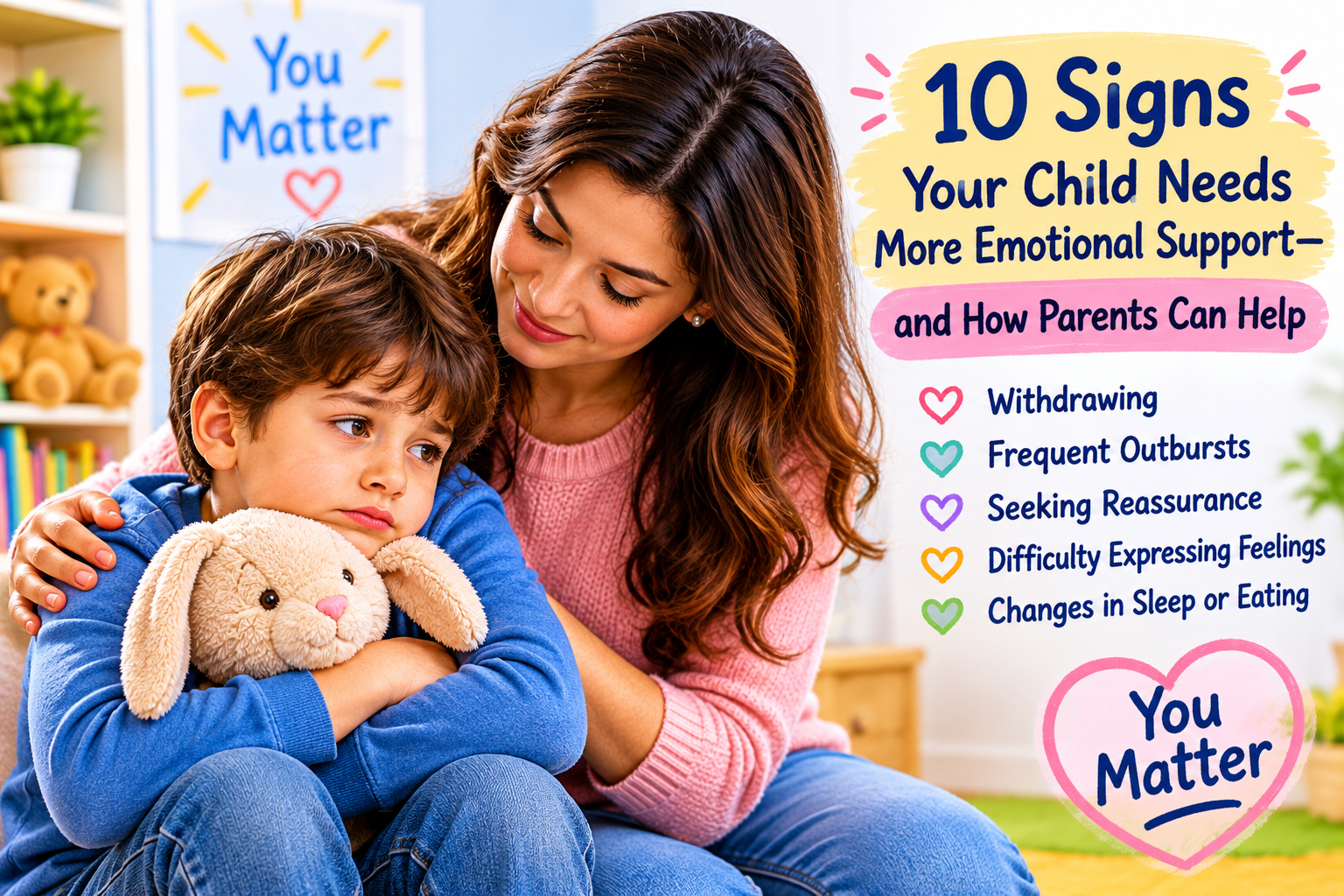
Children experience many emotions as they grow. They may feel happy, excited, frustrated, worried, lonely, or disappointed. While these feelings are a normal part of childhood, some children find it difficult to understand or express what they are experiencing.
For children ages 4–8, emotional development is still taking shape. They are learning how to communicate their feelings, manage frustration, build friendships, and develop confidence. During this stage, parents play an important role in helping children feel safe, understood, and valued.
Emotional support for children means helping them recognize their feelings, express emotions safely, build confidence, and feel loved and understood. When children receive consistent emotional support, they have opportunities to develop healthy relationships, emotional awareness, resilience, and self-worth.
But how can parents recognize when a child needs more emotional support?
Here are 10 signs to watch for and practical ways to help.
A child who once enjoyed playing, talking, or spending time with family may suddenly prefer being alone. They might avoid conversations or lose interest in activities they previously enjoyed.
How parents can help: Create opportunities for gentle connection without forcing conversation. Spend time reading together, drawing, playing, or simply sitting beside your child. Let them know you are available whenever they want to talk.
Crying, shouting, or becoming upset over small situations can sometimes indicate that a child is struggling with emotions they cannot yet explain.
Young children may not have the vocabulary to describe frustration, disappointment, or worry.
How parents can help: Stay calm and acknowledge the feeling before correcting the behavior. Try saying, “I can see that you’re frustrated. It’s okay to feel upset. Let’s work through it together.”
This teaches children that emotions are acceptable, even when certain behaviors are not.
Some children repeatedly ask whether they are doing things correctly, whether their parents are happy with them, or whether they are loved.
This may reflect uncertainty, fear of making mistakes, or a need for reassurance.
How parents can help: Offer consistent encouragement that focuses on your child’s worth rather than achievement. Remind them that mistakes are part of learning and that your love does not depend on their performance.
A child who gives up quickly, becomes upset when something is difficult, or avoids new activities may be struggling with confidence or frustration.
How parents can help: Break challenging activities into smaller steps. Celebrate effort, patience, and progress rather than expecting perfection.
Helping children develop confidence through everyday experiences can encourage them to try again when things become difficult.
Some children struggle to explain what is bothering them. Instead of saying they feel sad, worried, or embarrassed, they may become quiet, restless, or upset.
How parents can help: Introduce simple emotion words such as happy, sad, angry, scared, disappointed, and excited.
You can ask questions like:
Picture books and storytelling can also help children recognize emotions through characters and everyday situations.
Emotional difficulties can sometimes appear through changes in everyday routines. A child may have trouble falling asleep, experience frequent nightmares, lose their appetite, or become unusually picky.
These changes can have many causes, so they should not automatically be interpreted as emotional distress.
How parents can help: Maintain predictable bedtime and mealtime routines. Offer reassurance and create a calm environment where your child feels comfortable sharing concerns.
If changes persist or affect daily life, consider speaking with a healthcare professional.
Children who frequently feel left out, avoid playing with others, or have difficulty resolving disagreements may need additional emotional guidance.
Friendships provide important opportunities to develop empathy, communication, patience, and cooperation.
How parents can help: Talk about friendship, taking turns, sharing, and understanding other people’s feelings. Use stories and role-playing to help children explore different social situations.
Explore how picture books teach children kindness and empathy for more ideas.
Some children become anxious when they cannot complete a task perfectly. They may avoid drawing, learning new skills, or participating in activities because they are afraid of getting something wrong.
How parents can help: Show children that mistakes are a natural part of growing. Share examples of times when you made mistakes and learned something valuable.
Encourage a growth mindset with phrases such as, “You haven’t learned it yet, but you can keep practicing.”
Pay attention when your child regularly says things like:
These statements may indicate that a child is struggling with confidence, belonging, or self-worth.
How parents can help: Listen without dismissing their feelings. Avoid responding with only “Don’t say that.” Instead, ask what made them feel this way and offer reassurance.
Help your child understand that their value does not depend on achievements, appearance, or what other people think.
Learn more about building self-worth in children.
A child who suddenly becomes unusually clingy, worries about being separated from parents, or avoids unfamiliar situations may be looking for additional emotional security.
Changes in family routines, school experiences, or relationships can sometimes contribute to these feelings.
How parents can help: Offer patience, predictable routines, and gentle encouragement. Avoid shaming children for being afraid. Help them approach unfamiliar situations gradually while reminding them that you are there to support them.
Children do not need perfect parents. They need caring adults who listen, respond with patience, and create an environment where feelings are accepted.
Here are five simple ways to support your child’s emotional well-being:
Ask about your child’s day, feelings, and experiences. Give them time to answer without interrupting or immediately offering solutions.
Let children know that all feelings are normal. Saying “I understand why that made you sad” helps them feel heard and accepted.
Consistent routines, affection, and clear expectations help children feel secure.
Help children identify emotions and understand how feelings influence their actions. This supports the development of emotional intelligence in children.
Stories give children a gentle way to explore emotions, relationships, challenges, and personal experiences. They can help parents introduce difficult topics without putting pressure on children to talk about themselves immediately.
For additional guidance, explore social-emotional learning activities for kids.
Occasional emotional difficulties are a normal part of childhood. However, parents should consider seeking professional guidance when emotional or behavioral changes:
A pediatrician, child psychologist, or qualified mental health professional can help identify what may be happening and recommend appropriate support.
If a child talks about self-harm or suicide, take it seriously and seek immediate professional help.
Stories can create meaningful opportunities for parents and children to discuss feelings, confidence, kindness, and belonging.
You Matter, Luma, a children’s picture book by John R. Miles, introduces young readers to Luma the Bunny and an important message: every child matters simply because they exist.
Designed for children ages 4–8, the story explores self-worth, confidence, kindness, and the importance of recognizing personal value.
Parents and educators can use the story as a starting point for conversations about feeling accepted, understanding emotions, and appreciating what makes every child special.
The message is simple but meaningful: You matter, exactly as you are.
Common signs include withdrawal, frequent emotional outbursts, negative self-talk, difficulty expressing feelings, changes in sleep, increased anxiety, and struggles with friendships. These signs do not automatically indicate a problem, but persistent changes deserve attention.
Parents can support emotional well-being by listening without judgment, validating feelings, maintaining predictable routines, offering reassurance, encouraging emotional expression, and spending meaningful time together.
Emotional support helps children develop emotional awareness, confidence, healthy relationships, resilience, and a sense of belonging. It also gives them a safe environment to learn how to manage difficult feelings.
Parents can begin teaching emotional awareness during toddlerhood. Children ages 4–8 particularly benefit from learning simple emotion words, recognizing feelings, and practicing healthy ways to express themselves.
Yes. Age-appropriate picture books can introduce emotions through relatable characters and situations. Parents can use stories to discuss feelings, kindness, confidence, empathy, and problem-solving.
Parents should seek professional advice when emotional changes persist, become more intense, or interfere with everyday activities, relationships, school, or sleep.
Every child experiences difficult emotions, and needing support is a normal part of growing up. What matters is how the adults around them respond.
By listening, offering reassurance, encouraging emotional expression, and creating a loving environment, parents can help children feel understood and valued.
Remember, children do not need to have everything figured out. They need to know that someone is there to guide them through life’s challenges.
And sometimes, the most important message a child can hear is simply: You matter, exactly as you are.