

Children experience many emotions as they grow. Happiness, excitement, frustration, sadness, disappointment, and anger are all part of childhood. But for children ages 4–8, understanding these feelings and knowing what to do with them can sometimes be difficult.
Emotional regulation for kids is the ability to recognize, understand, and manage emotions in healthy ways. It does not mean children should stop feeling angry, sad, or frustrated. Instead, it means helping them express their feelings safely, recover from overwhelming moments, and gradually develop the skills to handle emotional challenges.
Parents and educators play an important role in this process. With patience, connection, and simple everyday practices, children can learn that every feeling is important, and that they can manage even their biggest emotions.
Emotional regulation is a child’s ability to notice emotions, understand what they are experiencing, and respond to those emotions in ways that are appropriate and safe.
For example, a child who feels frustrated because a puzzle is difficult might initially want to throw the pieces. With support, that child can learn to pause, ask for help, take a breath, or try again.
Emotional regulation develops gradually. Young children are still learning how emotions work, and they often need adults to help them calm down before they can think clearly.
This is an important part of social-emotional learning for kids, which helps children develop emotional awareness, relationships, empathy, and other essential life skills.
Children can experience emotions intensely because their emotional development is still underway. They may understand what they want but struggle to communicate their feelings or manage disappointment.
Common triggers for big feelings include:
Sometimes, what looks like misbehavior is actually a child struggling with an emotion they do not yet know how to manage.
Recognizing the emotional need behind a behavior can help adults respond with understanding rather than punishment alone.
Children learn emotional regulation through repeated experiences, supportive relationships, and everyday practice. Here are seven practical strategies parents and educators can use.
Children cannot always explain what they are feeling. Teaching emotional vocabulary helps them recognize and communicate their experiences.
Instead of saying, “Stop being upset,” try:
Naming emotions helps children connect words with their experiences.
You can also use picture books, emotion cards, or simple conversations to explore feelings. Over time, children may begin saying, “I feel frustrated,” instead of expressing frustration only through behavior.
Developing this awareness is an important part of emotional intelligence in kids.
Slow breathing can help children settle when emotions feel overwhelming.
Try a playful breathing activity:
Flower and Candle Breathing
Repeat a few times when your child feels calm, so the activity becomes familiar before difficult moments arrive.
Other options include balloon breathing, pretending to blow bubbles, or taking gentle belly breaths.
The goal is not to force a child to calm down immediately. It is to offer a simple tool they can gradually learn to use.
A calm-down corner is a comfortable, quiet space where children can take a break when they need help managing their feelings.
It might include:
Explain that the space is available whenever your child needs a moment.
A calm-down corner should not feel like punishment or isolation. It is a supportive place to rest, regroup, and return when ready.
Children can also learn that asking for a break is a positive way to care for themselves.
One of the most important emotional regulation strategies is helping children understand that all feelings are acceptable, but not every behavior is safe or appropriate.
For example, if a child hits a sibling because they are angry, you can acknowledge the emotion while setting a clear boundary.
Try saying:
“I can see that you’re angry. It’s okay to feel angry, but I won’t let you hit. Let’s find another way to show what you’re feeling.”
This approach communicates two important messages:
When children feel understood, they have more opportunities to learn from difficult emotional moments.
Children often cannot solve problems while they are overwhelmed.
Once your child is calmer, gently revisit the situation.
Ask questions such as:
For example, if a child becomes upset after losing a board game, you might talk about disappointment, taking turns, and trying again.
These conversations help children build resilience and recognize that mistakes, setbacks, and uncomfortable feelings are manageable parts of life.
Explore more ideas in Building Emotional Strength in Kids.
Children learn a great deal by watching adults.
When parents and educators demonstrate healthy emotional responses, children see what emotional regulation looks like in everyday life.
You might say:
“I’m feeling frustrated because this isn’t working. I’m going to take a few slow breaths and try again.”
Or:
“I felt disappointed when our plans changed, but I’m going to think about something else we can enjoy.”
Modeling does not mean adults must always remain perfectly calm. It means showing children how to recognize emotions, take responsibility, and respond constructively.
When adults make mistakes, they can also demonstrate how to apologize and repair relationships.
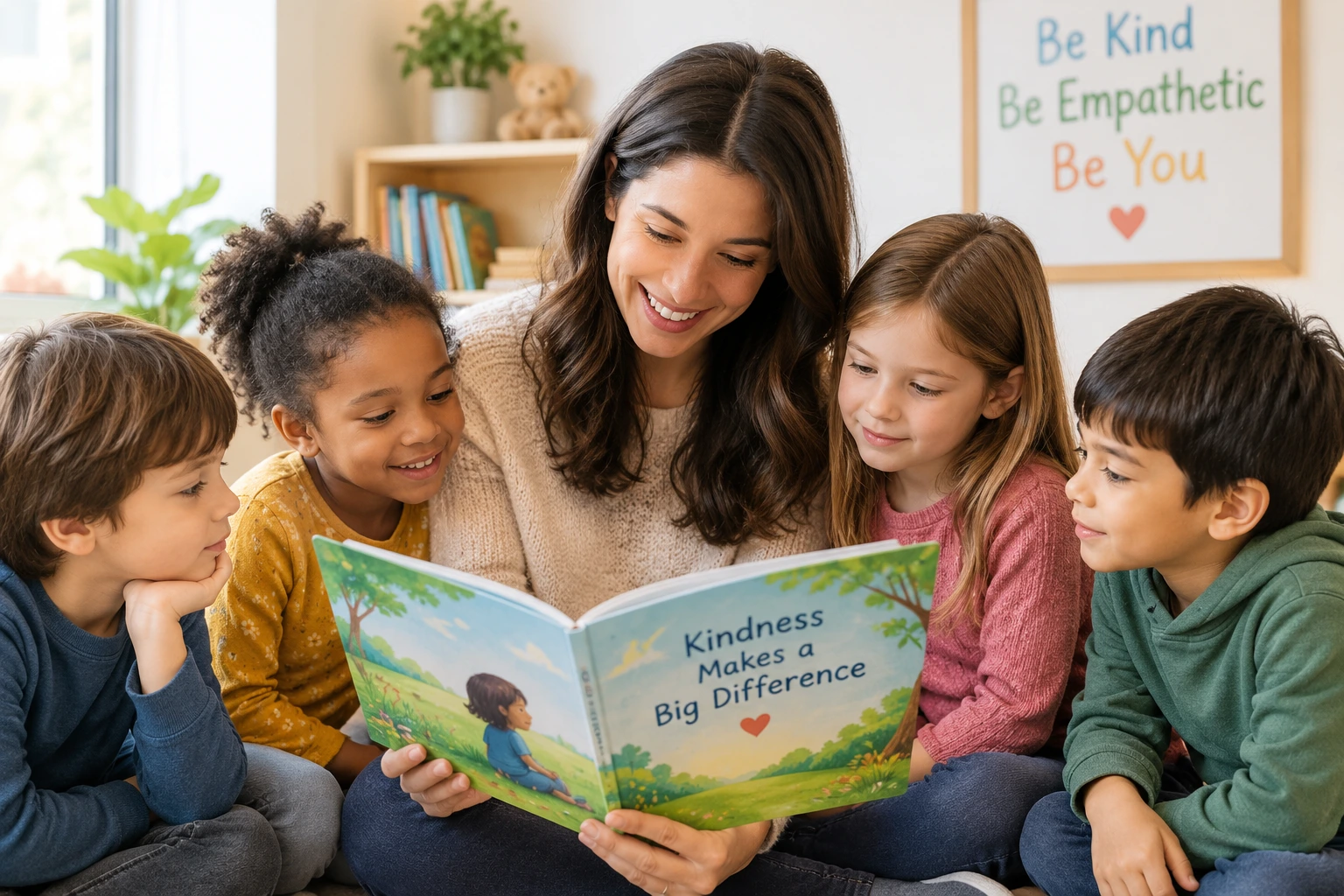
Stories provide children with a gentle way to explore emotions without feeling personally exposed.
When a character experiences sadness, frustration, fear, or loneliness, children can begin understanding those feelings through the character’s experiences.
Reading together creates opportunities to ask:
Picture books can also introduce important ideas about kindness, confidence, self-worth, and belonging.
You Matter, Luma, a children’s picture book by John R. Miles for ages 4–8, offers opportunities to discuss self-worth, kindness, and emotional connection through storytelling. These conversations can help children explore feelings while remembering that they matter, even during difficult moments.
When a child is overwhelmed, the priority is safety, connection, and helping them settle.
Try these simple steps:
Step 1: Stay calm and present. Use a gentle voice and avoid lengthy explanations during the most intense moment.
Step 2: Keep everyone safe. If a child is hitting, throwing objects, or hurting themselves, calmly intervene to prevent harm.
Step 3: Acknowledge the feeling. Say something simple, such as, “This feels really hard right now.”
Step 4: Offer support. You might offer space, quiet, a comforting presence, or a familiar calming activity.
Step 5: Talk later. When your child is ready, discuss what happened and practice another response for next time.
Remember that children may need time and repeated support before they can use emotional regulation strategies independently.
Emotional regulation becomes easier to practice when it is part of everyday routines rather than something introduced only during difficult moments.
Here are a few simple activities:
| Activity | How It Helps |
| Feelings check-in | Helps children identify emotions |
| Emotion drawing | Encourages emotional expression |
| Storytime conversations | Builds emotional understanding |
| Breathing games | Introduces calming techniques |
| Role-playing | Practices responses to challenging situations |
| Gratitude sharing | Encourages reflection on positive experiences |
| Kindness activities | Builds empathy and connection |
Teachers can include feelings check-ins during morning meetings, while parents can talk about emotions during bedtime routines.
Activities that encourage empathy and cooperation can also strengthen emotional awareness. Explore SEL activities for kids that encourage empathy.
Emotional regulation develops gradually, and progress may look different for every child.
Possible signs of growth include:
Progress does not mean children never experience tantrums, anger, or sadness. It means they are slowly developing more ways to understand and manage those experiences.
If emotional difficulties consistently interfere with daily life, relationships, or participation in school, parents may consider discussing their concerns with a pediatrician or qualified child-development professional.
The best approach combines emotional awareness, supportive adult relationships, modeling, and repeated practice. Help children name feelings, practice calming strategies when they are relaxed, and guide them through difficult moments with patience.
Children begin developing emotional regulation during infancy and continue learning throughout childhood. Preschool and early elementary years are important opportunities to build emotional vocabulary, practice calming strategies, and develop problem-solving skills.
Stay calm, acknowledge the emotion, and prioritize safety. Offer a familiar calming activity, quiet space, or supportive presence. Discuss the situation and practice alternative responses after your child has settled.
Yes. Picture books can introduce emotional vocabulary, demonstrate how characters respond to challenges, and create opportunities for meaningful conversations. They can support emotional learning when adults read together with children and discuss the story.
Emotional regulation means recognizing feelings and responding to them in healthy ways. Emotional suppression means hiding or pushing feelings away. Children should learn that emotions are normal and important, even when certain behaviors need boundaries.
Learning emotional regulation is not about raising children who never cry, become angry, or feel disappointed.
It is about helping children understand themselves, communicate their needs, and develop confidence in handling life’s everyday challenges.
When adults respond with patience, encouragement, and understanding, children learn that emotions are not something to fear or hide. They are experiences that can be recognized, expressed, and managed with support.
Through everyday conversations, calming activities, meaningful relationships, and stories that nurture self-worth, children can gradually develop emotional awareness and resilience.
Most importantly, children need to know that their worth does not depend on how perfectly they manage their feelings.
They matter when they feel happy. They matter when they feel frustrated. They matter when they make mistakes.
And with love, guidance, and practice, they can learn to navigate their big feelings one small step at a time.
Every child deserves to know that they matter, exactly as they are.
John R. Miles is the author of You Matter, Luma, a children’s picture book that encourages self-worth, kindness, confidence, and emotional connection in children ages 4–8.
Through the You Matter Luma series, he aims to help parents, caregivers, and educators create meaningful conversations about children’s emotional development, resilience, empathy, and the importance of knowing that every child matters.
Visit You Matter Luma to explore the book and additional resources for supporting children’s social-emotional learning.