Most parents want the same thing: to raise a child who feels secure, valued, and confident in who they are. Yet many still wonder how to help a child feel like they matter, even when they say all the right things.
You matter. I love you. You’re important.
Those words are meaningful. But on their own, they don’t always land.
Children don’t experience mattering as a concept. They experience it as a feeling built over time through everyday interactions that show they are seen, heard, and taken seriously.
If a child still feels invisible despite reassurance, it’s a signal that mattering is learned through experience, not repetition.
Here’s the simplest way to understand it: Mattering = Being Noticed + Being Essential
Children feel like they matter when:
You can love a child deeply and still unintentionally miss one of these elements. When either is missing, reassurance alone can’t fill the gap.
When children feel like they matter, they don’t need to be convinced. They already know it in their bodies.
But when a child feels rushed, dismissed, or emotionally unseen, affirmations can feel disconnected from reality. A child can hear you matter while also noticing that their feelings are brushed past, their stories cut short, or their presence treated as an interruption.
Children don’t measure their worth by words. They measure it by how adults respond to them when it counts.
Understanding how to help a child feel like they matter means shifting focus from reassurance to relationship.
Children learn mattering by watching what happens after they express themselves:
Over time, these moments answer a child’s unspoken question: Do I count here?
Understanding how children feel seen and heard helps parents move from reacting to behavior to responding to meaning.
Many parents are searching for practical ways to help a child feel valued, especially during emotionally charged moments. This is where emotional validation for children quietly shapes everything. When adults understand how children feel seen and heard, they move beyond managing behavior and begin building emotional security in childhood. Over time, these small responses support healthy child emotional development through consistent signals that say, you matter here.
Those signals tend to show up in three simple, repeatable ways.
Children often express feelings before they can explain them. Big reactions, withdrawal, or defiance are often treated as problems to be corrected rather than as signals to be understood.

Being seen means slowing down enough to recognize what’s underneath:
When a child feels seen beneath their behavior, they learn something essential: My experience matters, not just my compliance.
Many adults listen with the intention to solve. But children feel heard when someone stays with their feelings instead of rushing them away. This kind of listening provides emotional validation for children, teaching them that their feelings don’t need to be fixed to be respected.
Listening without fixing might sound like:
This kind of listening teaches a child that their voice carries weight—that their words don’t disappear into the room.
Children don’t feel most significant when they are constantly protected or praised. Children feel significant when they realize their presence makes a difference. This shift from being cared for to being needed is what we call the Luma Effect: the internal glow that happens when a child realizes their presence is essential to the family’s light.
Being needed doesn’t mean placing adult responsibility on young shoulders. It means:
Contribution builds belonging. Belonging builds mattering.
Sometimes it helps to see the difference clearly.
| “I’ll be there in a minute.” | Instead of Reassurance (Words) | Try Mattering (Action) |
|---|---|---|
| Child is frustrated | “It’s okay, you’ll do better next time.” | “I can see how much effort you put into that. It’s hard when things don’t go as planned.” |
| You are busy | “I’ll be there in a minute” | (Make eye contact. Put one hand on the child’s shoulder.) “I want to hear this. Give me two minutes to finish, then I’m all yours.” |
Reassurance tells a child how they should feel. Mattering actions show them where they stand.
When children feel like they matter, their inner world stabilizes.
They become more resilient because they feel anchored. They’re more willing to try, fail, and express themselves honestly. They don’t need to perform for belonging. Over time, these experiences become the foundation for building emotional security in children, especially during moments of stress or uncertainty.
Mattering doesn’t eliminate struggle. It gives children the security to grow through it.
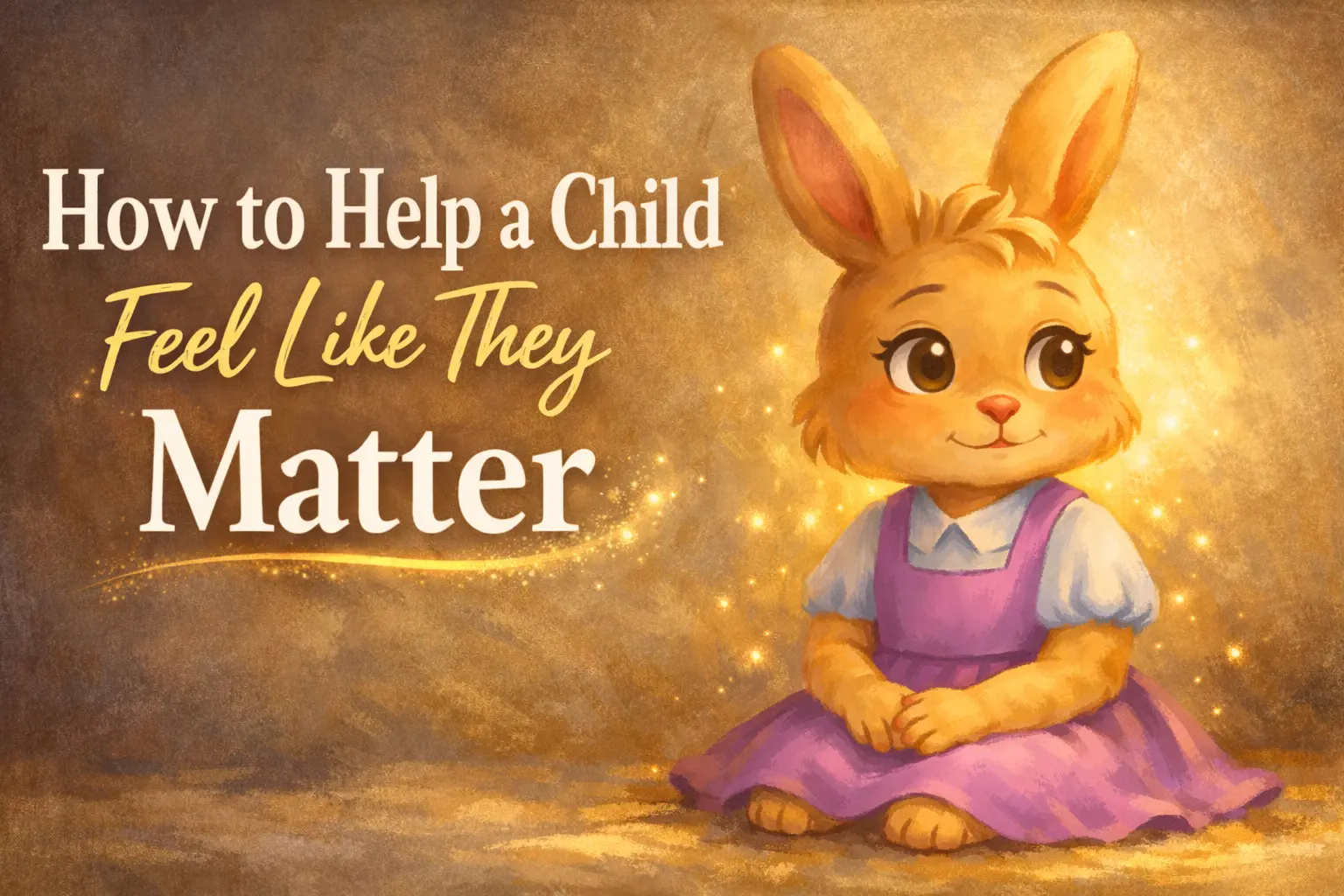
In the You Matter Luma story, Luma doesn’t rush to solve emotions or make discomfort disappear. She listens. She notices. She stays.
Through Luma, children learn that they don’t have to earn attention by being perfect or cheerful. They matter simply because they exist.
They matter simply because they’re here.
If you’re still wondering how to help a child feel like they matter, start with this: Tonight, when your child brings you something, a feeling, a story, a question, pause.
Before fixing or redirecting, reflect on what you hear:
You don’t have to say you matter perfectly. You just have to show it consistently.