

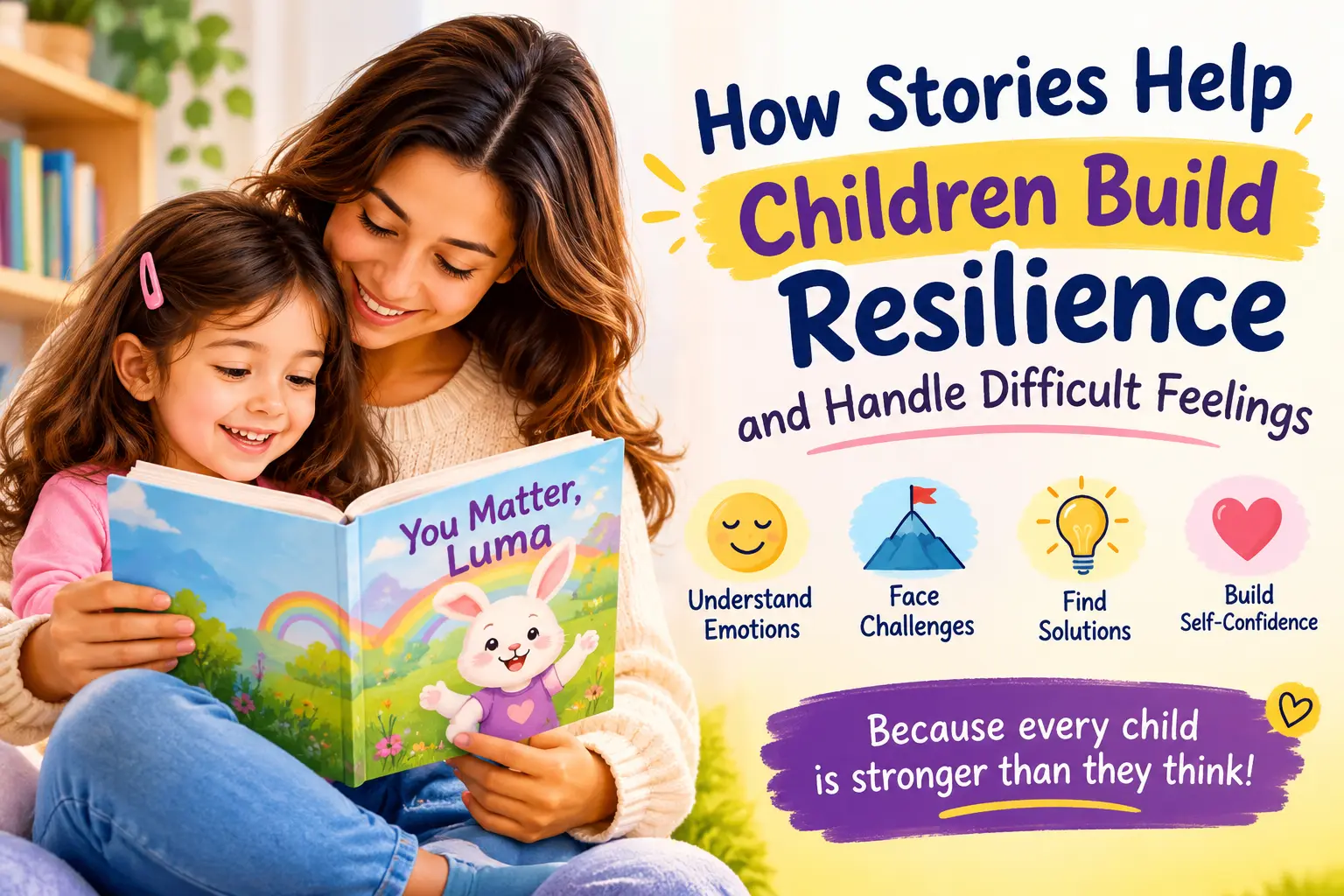
Children experience many emotions as they grow. They may feel disappointed when something goes wrong, nervous when trying something new, or sad when they feel left out. Learning how to handle these moments is an important part of emotional development.
Stories can help children build resilience by showing them how characters face challenges, experience difficult feelings, and discover ways to keep going. Through relatable characters and meaningful situations, children can explore emotions, understand mistakes, and learn that difficult moments do not define who they are.
For parents, caregivers, and educators, resilience books for kids offer a gentle and engaging way to introduce emotional skills and encourage meaningful conversations.
Resilience is a child’s ability to adapt, recover, and continue moving forward when facing challenges, disappointments, or difficult experiences.
It does not mean children never feel sad, frustrated, worried, or discouraged. Instead, resilience helps children recognize their feelings, seek support, and gradually develop ways to cope with life’s challenges.
For children ages 4–8, resilience may look like:
Resilience develops over time through supportive relationships, emotional experiences, and opportunities to practice coping skills.
Stories create a safe and familiar way for children to explore situations that may feel confusing or overwhelming in real life.
Young children may not always have the words to explain what they feel. A story can introduce emotions through characters, facial expressions, actions, and situations.
When a character feels nervous, disappointed, lonely, or frustrated, children can begin recognizing similar emotions in themselves.
For example, a child listening to a story about a rabbit who feels left out may begin understanding that loneliness is a feeling that others experience too.
This supports emotional awareness, an important foundation for resilience.
Parents can ask simple questions such as:
These conversations help children connect storytelling with their own emotional experiences.
Children sometimes believe that making mistakes means they are not good enough.
Stories can gently challenge this belief by showing characters who struggle, make mistakes, or experience disappointment before finding a way forward.
When children see a character facing difficulties, they learn that challenges are a normal part of growing.
A character who struggles to make a friend, complete a task, or overcome a fear can help children understand that difficult experiences do not mean failure.
This message encourages children to approach challenges with greater patience and confidence.
Resilient children gradually learn to think about what they can do when something goes wrong.
Stories often present problems that characters must solve. Children can observe how characters respond, consider different choices, and discuss possible solutions.
For example, if a character becomes upset after losing a game, children can explore different responses:
These discussions encourage flexible thinking and help children understand that difficult situations may have more than one possible response.
Resilience is closely connected to how children see themselves.
When children believe they are valuable even when they make mistakes, they may find it easier to face challenges without feeling that their worth is at risk.
Stories can reinforce an important message: A child’s worth does not depend on winning, being perfect, or making everyone happy.
This is especially meaningful for children who struggle with self-doubt or compare themselves with others.
Books that explore self-worth and confidence can help parents introduce these ideas naturally.
You can also explore our guide on how to build confidence in kids for additional everyday strategies.
Resilience does not mean handling everything alone.
Children benefit from learning that trusted adults, family members, teachers, and friends can provide comfort and support during difficult moments.
Stories that include supportive relationships can show children that asking for help is a strength.
A character who shares their worries with someone they trust helps demonstrate that emotions can be expressed and that support is available.
This message encourages children to communicate their needs rather than feel ashamed of struggling.
Reading together can become a valuable opportunity to practice emotional skills.
Here are five simple ways parents and caregivers can use stories to support resilience.
Instead of rushing through the story, pause when a character feels upset, worried, or disappointed.
Ask your child what they notice about the character’s feelings.
This helps children slow down and recognize emotional experiences.
Invite children to think about possible responses.
You might ask:
There is no need to expect perfect answers. The purpose is to encourage thoughtful exploration.
Children often understand emotional lessons more easily when they connect them to familiar situations.
After reading, you might say:
“Remember when the character felt nervous about trying something new? Sometimes we feel that way, too.”
This helps children understand how story experiences relate to real life.
When a character keeps trying, highlight the effort rather than only the outcome.
For example:
“I noticed the character kept practicing even when it was difficult.”
This encourages children to recognize persistence, patience, and learning as meaningful achievements.
Children often enjoy hearing the same story repeatedly.
Revisiting a familiar book gives them opportunities to notice new details, understand characters more deeply, and strengthen their understanding of emotional lessons.
Repeated reading can also create a comforting routine for conversations about feelings.
When choosing children’s books that support resilience, look for stories that:
For children ages 4–8, picture books with expressive illustrations, simple language, and emotionally meaningful situations can be particularly useful.
Books that combine storytelling with gentle emotional lessons can support conversations at home and in classrooms.
You Matter, Luma by John R. Miles is a children’s picture book that explores self-worth, kindness, confidence, and belonging through the story of Luma the Bunny.
Luma’s journey introduces children to an important idea: You matter simply because you are you.
This message can support resilience by helping children understand that their value does not disappear when they experience disappointment, uncertainty, or mistakes.
The story provides parents, caregivers, and educators with opportunities to discuss:
For families looking for children’s books that support social-emotional learning, You Matter, Luma offers a gentle storytelling experience centered on emotional connection and self-worth.
Explore You Matter, Luma and order your copy.
Learn more about social-emotional learning for kids and explore how stories can support children’s emotional development.
Books introduce children to characters who experience challenges, difficult feelings, and setbacks. By observing these experiences, children can explore coping strategies, problem-solving, persistence, and emotional awareness in a familiar and safe context.
The best resilience books for kids feature relatable characters, meaningful challenges, supportive relationships, and positive messages about learning from mistakes. Choose stories appropriate for your child’s age and emotional needs.
Resilience begins developing in early childhood. Children ages 4–8 can gradually learn emotional awareness, problem-solving, persistence, and help-seeking through everyday experiences, supportive relationships, and storytelling.
Yes. Picture books can help children recognize emotions, understand emotional situations, and discuss possible responses. Reading together also gives parents and educators opportunities to model empathy and supportive communication.
Parents can ask simple, open-ended questions such as “How did the character feel?” or “What helped them?” Connecting story situations with everyday experiences can encourage children to express their feelings and think about coping strategies.
Children who understand that their worth is not dependent on success or perfection may find it easier to approach challenges without feeling that mistakes make them less valuable. Supportive relationships and positive emotional experiences help reinforce this understanding.
Resilience is not something children develop overnight. It grows through everyday experiences, caring relationships, emotional understanding, and opportunities to learn from challenges.
Stories make these lessons approachable by helping children recognize feelings, explore solutions, and understand that difficult moments are part of life.
For parents and educators, resilience books for kids can become more than bedtime stories. They can open meaningful conversations about courage, kindness, confidence, and the importance of asking for help.
Through stories like You Matter, Luma, children can begin to understand a reassuring message that stays with them as they grow: Even when things feel difficult, you are still important, you are still loved, and you still matter.