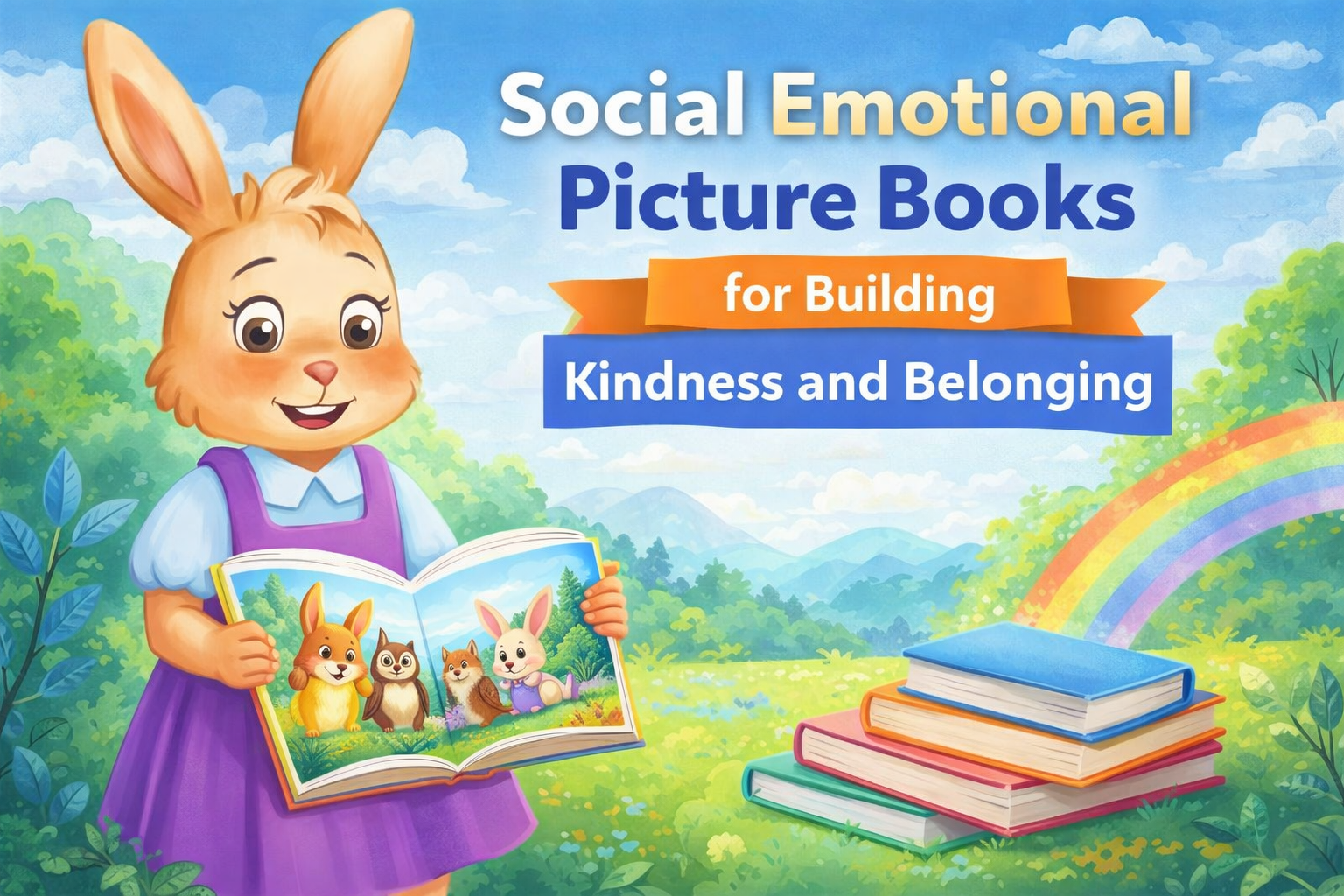
There’s something magical about the moment a child’s eyes light up during storytime. The way they lean in closer. The questions that tumble out afterward. The hug they give their sibling seemingly out of nowhere. Picture books don’t just entertain, they plant seeds that grow into the adults our children will become.
But not all picture books plant the same seeds. While many stories bring laughter and adventure, social emotional learning picture books do something more profound. They teach hearts how to be kind, show children they belong, and give language to feelings that once felt too big to name.
In a world where children face unprecedented challenges from social media comparison to academic pressure to simply figuring out where they fit, these books offer something every child desperately needs: a mirror showing their worth and a window into understanding others.
Why Social Emotional Learning Picture Books Matter More Than Ever
Childhood looks different from what it did even a decade ago. Today’s children navigate complexities that previous generations never faced. They’re overscheduled, overstimulated, and often overwhelmed. Anxiety rates among young children have skyrocketed. Kindness sometimes feels like a rarity rather than the default.
Picture book social emotional learning addresses these challenges in ways that children can actually absorb. Through beautiful illustrations and relatable characters, they teach:
Essential emotional skills:
- Recognizing and naming feelings without shame
- Understanding that everyone struggles sometimes
- Developing empathy by seeing through others’ perspectives
- Building genuine self-worth not tied to achievement
- Learning that kindness, starting with self-kindness, changes everything
Unlike lectures or direct instruction that children tune out, social emotional learning picture books work because they invite rather than instruct. They show instead of telling. They create safe spaces where children can explore complex emotions through characters who feel like friends.
The Unique Power of Picture Books
Why picture books specifically? Why not chapter books, educational videos, or apps promising to teach emotional intelligence?
Because childhood picture books combine visual and narrative elements in ways that resonate deeply with how young minds work. The illustrations do more than decorate, they convey emotion, create atmosphere, and give children visual anchors for abstract concepts like “belonging” or “courage.”
Picture books offer unique advantages:
They work for a diverse range of ages and reading levels. A three-year-old absorbs the images and simple message, while an eight-year-old catches deeper emotional nuances. They create shared experiences for families and classrooms, providing natural conversation starters about feelings. The combination of art and story engages multiple learning pathways simultaneously, and repeated readings reveal new layers as children grow and develop.
When a child sees Luma the Bunny’s face showing uncertainty, they recognize that feeling in themselves. When they watch her discover she matters, they absorb that possibility for their own lives. This visual-emotional connection makes picture books about kindness far more effective than simply telling children to “be kind.”
Building Kindness Through Story
Here’s what most people misunderstand about teaching kindness: you can’t lecture children into being kind. You can recite golden rules, post classroom expectations, and reward good behavior, but lasting kindness grows from something deeper.
It grows from empathy. From seeing yourself in others. From understanding that everyone carries struggles you can’t see. From believing you’re worthy of kindness yourself, which makes extending it to others feel natural rather than forced.
Picture books about kindness plant these deeper seeds. They don’t just show kind acts, they reveal the emotional landscape that makes kindness possible.
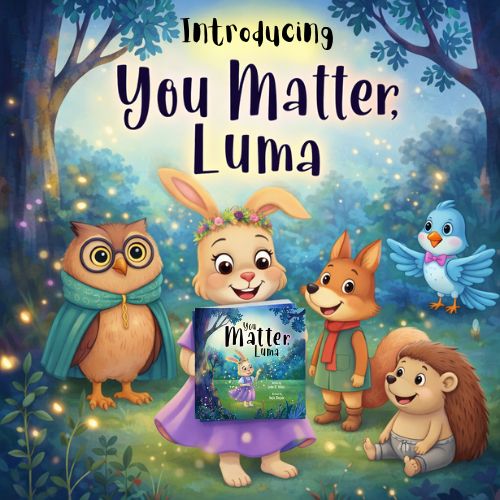
In You Matter Luma, children don’t just watch characters be nice to each other. They journey alongside Luma as she wonders if anyone truly sees her. They feel Oliver the Owl’s patient presence as he helps friends understand their feelings. They watch Sage the Fox create spaces where everyone feels welcome.
These aren’t lessons in kindness; they’re experiences of it. Children absorb not just what kindness looks like but what it feels like to give and receive it. That emotional understanding transforms behavior in ways rules never could.
Creating Belonging, Not Just Fitting In
There’s a crucial difference between fitting in and belonging. Fitting in requires changing yourself to match external expectations. Belonging means being accepted exactly as you are.
Too many children spend their energy trying to fit in, performing, hiding parts of themselves, and wondering if they’re enough. The right social emotional learning picture books teach a different truth: you don’t have to earn belonging. It begins the moment you believe “I matter just as I am.”
You Matter Luma centers this message. Luma doesn’t become louder, bolder, or different to belong in the Passion Struck Forest. She discovers that her quiet, thoughtful nature is exactly what the forest needs. Her gentle courage creates ripples that touch everyone around her.
This distinction matters enormously for sensitive children, introverted kids who feel overshadowed by louder classmates, children who are “different” in any way, those facing transitions or changes, and kids learning to trust their own worth.
These children need books that validate their authentic selves rather than suggesting they need to change to matter. They need stories showing that belonging isn’t about being the same as everyone else, it’s about everyone having space to be themselves.
The Forest Friends: Belonging in Action
What makes the You Matter series particularly powerful in teaching belonging is how each character contributes differently to the forest community. Children see that:
Luma’s quiet observation helps her notice when others are struggling, a superpower often overlooked in our loud world.
Oliver’s patient wisdom creates calm when everything feels chaotic, showing that thinking slowly has value.
Wren’s creative expression brings beauty and joy, demonstrating that artistic sensitivity enriches everyone’s lives.
Sage’s welcoming presence makes every creature feel valued, teaching that inclusion is an active practice.
Theo’s curious experiments sometimes fail but always teach, normalizing mistakes as part of growth.
Zin’s big feelings and journey to manage them show that struggling emotionally doesn’t make you broken it makes you human.
Together, these characters demonstrate that belonging thrives in diversity. The forest needs every type of friend. So does every classroom, family, and community. Social-emotional learning picture books like You Matter, Luma show children this truth through experience, not explanation.
Teaching Emotional Intelligence Through Beautiful Art
Among social-emotional learning picture books, the quality of artwork profoundly impacts effectiveness. Illustrations aren’t just decoration, they’re teaching tools that help children:
Recognize emotions visually. When they see Luma’s downcast eyes or Wren’s nervous wing-flutter, they learn what these emotions look like in others and can better identify them in themselves.
Feel emotional resonance. Beautiful, warm artwork creates the safe emotional space children need to engage with challenging feelings. The Passion Struck Forest feels inviting, making difficult conversations feel less threatening.
Develop visual literacy. Reading facial expressions, body language, and atmospheric cues in illustrations teaches children to notice these same signals in real life a crucial component of emotional intelligence.
Create lasting memories. Children remember images longer than words. When they recall Luma’s journey years later, the illustrations anchor the emotional lessons in their minds.
You Matter Luma features stunning, empathy-sparking artwork specifically designed to support emotional learning. Every illustration serves the story’s emotional arc, helping children connect with feelings they might not yet have words for.
From Bedtime Stories to Classroom Tools
The beauty of picture book social emotional learning is its versatility. The same book that comforts a child at bedtime can teach a classroom about inclusion the next day.
For families, these books:
- Create natural opportunities for emotional conversations during quiet moments
- Provide comfort during transitions, changes, or difficult periods
- Give language to feelings children struggle to express
- Build shared emotional vocabulary between parents and children
- Offer reassurance that big feelings are normal and manageable
For educators, they:
- Introduce social-emotional learning concepts in engaging, age-appropriate ways
- Address classroom dynamics like exclusion or bullying through story
- Support students processing difficult emotions or experiences
- Create inclusive classroom cultures where every child feels valued
- Provide concrete examples of kindness, empathy, and belonging
The You Matter Luma blog offers specific guidance on kindness activities for the classroom and SEL strategies for parents at bedtime, helping both groups maximize these books’ impact.
Choosing Quality Social Emotional Learning Picture Books
Not all books labeled “social-emotional learning” deliver equal value. When selecting social emotional picture books for your child or classroom, look for:
Authentic emotional experiences rather than preachy lessons. Children need stories that validate their feelings, not lectures about how they should feel.
Complex characters who struggle and grow. Perfect characters who never face challenges teach nothing. Relatable ones who navigate real difficulties teach everything.
Beautiful, emotion-conveying artwork that enhances rather than just illustrates the story. The images should deepen emotional understanding.
Messages that empower rather than shame. The best books help children feel capable of handling their emotions and worthy exactly as they are.
Opportunities for conversation and reflection. Stories that raise questions and invite discussion have more lasting impact than those that tie everything in neat bows.
Respect for children’s intelligence and emotional complexity. Young children can handle nuanced emotional content when presented thoughtfully.
You Matter Luma meets all these criteria while adding something rare: genuine understanding born from lived experience. Author John R. Miles knows what it feels like to wonder if you matter because he asked that question himself as a child. This authenticity permeates every page.
Beyond the Last Page: The Ripple Challenge
What distinguishes exceptional picture books about kindness from merely good ones is how they extend beyond the final page. Reading shouldn’t be passive consumption, it should inspire action.
You Matter Luma integrates the Ripple Challenge, transforming the story into a lived experience:
Read the book together, absorbing Luma’s message that you matter exactly as you are.
Do one small act of kindness tell someone they matter, give an unexpected hug, draw a picture for a friend, leave an encouraging note, or whatever feels right.
Get a free Ripple Card (digital or physical) and mark your act of kindness.
Pass it on, asking the recipient to continue the chain.
Watch the ripples spread across a map showing kindness spreading around the world with children everywhere participating.
This transforms social emotional learning picture books from abstract lessons into concrete practice. Children learn that stories aren’t just something you read they’re something you live. The kindness they show creates real change, just like Luma’s courage transformed the Passion Struck Forest.
A Series That Grows With Your Child
Picture books shouldn’t be one-and-done experiences. The most impactful ones become companions children return to repeatedly, finding new meaning as they grow.
The You Matter series offers this ongoing companionship. You Matter Luma is just the beginning. More stories are coming, each one featuring beloved forest friends while exploring different facets of emotional intelligence, self-worth, courage, empathy, and belonging.
This picture book series approach means:
- Children develop relationships with characters who feel like friends
- Each book builds on previous emotional lessons while introducing new ones
- Families create traditions around these stories, deepening their impact
- The series grows alongside your child, remaining relevant through developmental stages
For parents seeking childhood books series that prioritize heart development alongside entertainment, this provides exactly that beautiful stories that teach what truly matters.
Real Impact on Real Children
Among picture books about kindness and belonging, what makes certain books transformative versus forgettable?
Real impact happens when:
Children ask to read the book repeatedly, finding comfort and new insights each time. They reference characters or lessons spontaneously in daily life “I feel like Luma today” or “Can I do a Ripple Challenge for grandma?” They show increased awareness of others’ feelings and more inclusive behavior. They demonstrate greater self-acceptance and willingness to be themselves. They initiate conversations about emotions they previously kept inside.
Parents and teachers report exactly these changes with You Matter Luma. Children connect with Luma’s gentle courage and carry her message into their lives. The story doesn’t just entertain for twenty minutes it reshapes how children see themselves and others.
Starting Meaningful Conversations
Many parents and teachers want to discuss emotions with children but feel uncertain how to begin. Social emotional picture books provide perfect entry points.
After reading You Matter Luma, try:
“Have you ever felt like Luma, wondering if people really see you?” This validates their feelings and shows emotions are normal to discuss.
“Which forest friend do you relate to most? Why?” Children often share more through character identification than direct questions about themselves.
“What helps you when you’re having big feelings?” This teaches emotional regulation strategies while gathering information about what works for your specific child.
“How can we show others they matter this week?” This connects story to action, moving from concept to practice.
“What makes you feel brave, even when something feels scary?” This builds confidence by helping children recognize their own courage.
These conversations, prompted naturally by story, feel safer than interrogation. Children open up when discussing characters’ experiences before connecting them to their own lives.
The Gift That Keeps Giving
If you could give your child or students one lasting gift, what would it be? Not another toy that breaks or a trend that fades, but something that shapes who they become?
The right social emotional learning picture books offer exactly this. They’re investments in:
- Emotional intelligence that serves children their entire lives
- Self-worth that weathers challenges and setbacks
- Empathy that creates kinder communities
- Belonging that helps children trust they’re enough exactly as they are
- Courage to show up authentically in a world that often demands conformity
You Matter Luma and the series that follows provide these gifts wrapped in beautiful artwork, memorable characters, and a story children actually want to read repeatedly. It’s education that feels like love. Learning that looks like storytime.
Join the Movement
Ready to bring these lessons of kindness and belonging into your home or classroom? Preorder You Matter Luma and become part of something larger than a book a movement reminding children everywhere that they matter.
Sign up for Luma’s Letters to receive monthly kindness tips, activities, and inspiration. Prepare to participate in the Ripple Challenge and watch your kindness spread across the map. Explore what’s coming in the You Matter series. Connect with a community of parents and educators committed to raising emotionally intelligent, kind-hearted children.
Every child deserves books that see them, stories that validate their feelings, and messages that remind them: You belong. You matter. You’re enough exactly as you are.
Sometimes all it takes is one picture book, one gentle bunny, and one powerful truth to change how a child sees themselves and the world.
Order your copy today and discover why picture books social emotional learning like You Matter Luma are transforming childhoods one story, one heart, one ripple at a time.
Frequently Asked Questions
What makes picture books effective for teaching social-emotional skills?
Picture books combine visual and narrative elements that resonate with how young minds learn. The illustrations help children recognize emotions visually seeing a character’s downcast eyes teaches what sadness looks like. The combination of art and story engages multiple learning pathways simultaneously, making lessons stick. Additionally, the shared experience of reading together creates natural opportunities for conversation about feelings, making abstract concepts concrete and discussable.
At what age should I start reading social emotional picture books with my child?
You can start as early as age 2-3, though they’ll absorb different lessons at different ages. Younger children (2-4) connect with simple messages and beautiful images. Preschoolers (4-5) begin understanding emotional concepts like feeling left out or nervous. Early elementary children (6-8) grasp deeper nuances about belonging, self-worth, and empathy. The beauty of quality social emotional learning picture books is they grow with children, revealing new layers upon repeated readings.
What’s the Ripple Challenge, and why does it matter?
The Pass the Ripple challenge transforms reading from passive to active learning. After reading You Matter Luma, children perform one act of kindness, mark it on a Ripple Card, and pass it on. This matters because children learn best through doing, not just hearing. The challenge connects story to real life, making abstract concepts like “kindness creates ripples” tangible. It also builds agency children see they can create positive change, which builds confidence and reinforces the lessons.
Should I discuss the book immediately or let my child process it first?
Follow your child’s lead. Some children want to talk immediately, asking questions and making connections. Others need processing time before they’re ready to discuss. You might simply ask, “What did you think?” and see where they go. If they’re not ready to talk, that’s fine the story still impacts them. You can revisit conversation later, perhaps the next day or when a relevant situation arises naturally.
Where can I find more resources for using these books effectively?
The You Matter Luma blog offers extensive free resources including discussion guides for specific books, kindness activities for home and classroom, age-appropriate conversation starters, tips for addressing specific emotional challenges, and guidance on building emotional intelligence through reading. Sign up for Luma’s Letters to receive monthly inspiration, activities, and insights delivered directly to your inbox.