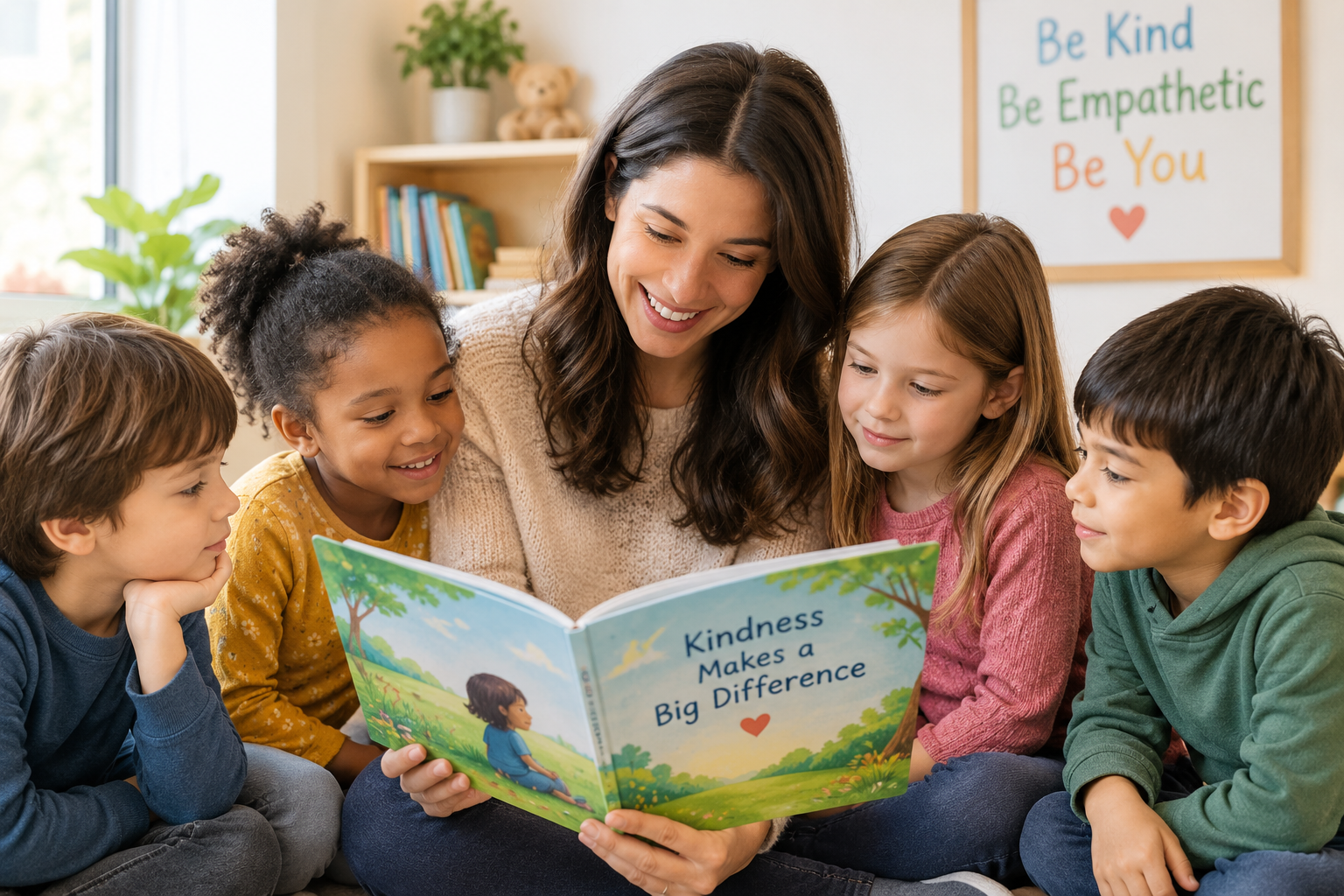
Teaching children how to be kind and understand the feelings of others is an important part of their emotional and social development. Parents, caregivers, and educators often look for meaningful ways to teach kids kindness and empathy, especially during the early years when children are learning how their words and actions affect others.
Picture books can be a powerful tool for these conversations. Through relatable characters, engaging stories, and emotional situations, children can explore kindness, empathy, friendship, and compassion in a way that feels natural and memorable.
For children ages 4–8, stories can help turn important life lessons into experiences they can understand. A character’s journey may encourage a child to think about how someone else feels, why kindness matters, or what they could do to help another person.
You Matter Luma, a children’s picture book by John R. Miles, is part of a storytelling approach designed to help children explore self-worth, kindness, emotional awareness, confidence, and the idea that every person matters.
Kindness and empathy help children build positive relationships and better understand the people around them.
Kindness involves treating others with care, respect, and consideration. It can include sharing, helping, encouraging someone, or simply choosing words that do not hurt another person.
Empathy is the ability to recognize and understand how another person may feel. For young children, empathy often begins with simple questions such as, How do you think your friend feels? or What could you do to help?
Children are not born knowing how to respond to every social or emotional situation. They learn through experiences, conversations, observation, and guidance from the adults in their lives.
When parents and educators intentionally teach kindness and empathy, they give children opportunities to develop important social-emotional skills that can support friendships, communication, emotional awareness, and positive relationships.
Young children often learn best through stories. A direct lesson about empathy may feel abstract, but a story about a character experiencing loneliness, fear, disappointment, or joy gives children a situation they can imagine.
Picture books can help children:
Stories also allow children to discuss emotions without feeling personally criticized or pressured. Instead of asking, Why were you unkind?, an adult can ask, What do you think the character could have done differently?
This creates a more open and thoughtful conversation.
Reading a book is only the beginning. The conversations and activities surrounding the story can help children connect the lessons to their own lives.
Children are more likely to connect with characters who experience familiar emotions and challenges.
Look for picture books that explore themes such as friendship, belonging, helping others, feeling different, making mistakes, confidence, kindness, and understanding emotions.
Stories do not need to provide a perfect answer to every situation. Sometimes the most valuable books are those that encourage children to think and ask questions.
A character who struggles, learns, or makes a mistake can give children an opportunity to discuss what kindness and empathy might look like in real life.
Asking questions helps children move from simply listening to actively thinking about the story.
Try asking:
These questions encourage perspective-taking, which is an important part of developing empathy.
There is no need to turn every reading experience into a lesson. Sometimes a simple question and a few minutes of conversation are enough.
Children may find it difficult to understand the feelings of others if they are still learning to identify their own emotions. Picture books can introduce emotions such as happiness, sadness, worry, disappointment, excitement, frustration, and loneliness.
When a character experiences an emotion, ask your child to describe what they notice. They may observe facial expressions, body language, or actions.
You can also connect the story to everyday experiences by saying, The character looks disappointed. Remember when you felt disappointed because something did not go the way you hoped? Helping children build an emotional vocabulary can make conversations about empathy easier and more meaningful.
The goal is not simply for children to understand kindness inside a book. It is to help them recognize opportunities to practice kindness in their daily lives.
After reading, you might ask:
Is there someone we could help today?
How can we show kindness to a friend?
What could we do if someone at school feels left out?
Small acts of kindness can become meaningful learning opportunities. Children may write a kind note, help a family member, include someone in a game, or offer encouragement to a friend.
The important lesson is that kindness does not always require a grand gesture. Often, simple actions can make someone feel seen and valued.
Empathy is not always about knowing exactly how someone feels. It can begin with paying attention and listening.
Encourage children to notice when someone might need support and to listen when another person shares their feelings.
You can model this by saying things such as:
I can see that you’re upset. Would you like to tell me what happened?
When children experience empathy themselves, they have an example of how caring and understanding can feel.
Picture books can reinforce this lesson by showing characters who listen, support one another, or take time to understand a situation before reacting.
Children will not always behave kindly. Making mistakes is part of learning.
Instead of expecting perfection, help children understand how they can repair a situation when they hurt someone.
Picture books that include mistakes, misunderstandings, or conflict can be especially useful for these conversations.
Ask your child:
What happened?
How do you think the other character felt?
What could this character do to make things better?
These discussions can help children understand that kindness also involves taking responsibility and making thoughtful choices after mistakes.
Children who understand that they have value may also be better prepared to recognize the value of others.
You Matter Luma by John R. Miles introduces children to themes of self-worth, emotional awareness, kindness, belonging, and the importance of understanding that they matter.
For parents and educators, stories like You Matter Luma can become a starting point for conversations about how children see themselves and how they treat others.
After reading together, adults can ask children:
These conversations can help connect storytelling with everyday emotional experiences.
Picture books work best when their messages are supported by everyday experiences.
Parents and caregivers can help children practice kindness by modeling respectful communication, acknowledging kind behavior, and talking openly about emotions.
You might create a simple family habit of sharing one kind thing someone did each day. You could also encourage children to think about a person who may need encouragement or support.
It is equally important to show children kindness toward themselves. Children should learn that self-worth and empathy can exist together. Caring about others does not mean ignoring their own feelings or needs.
Teaching children that they matter can provide an important foundation for helping them understand that other people matter too.
Teachers, librarians, and educators can use picture books as part of social-emotional learning activities.
After reading a story, students can discuss a character’s feelings, create alternative endings, draw a moment when someone showed kindness, or talk about how they would respond in a similar situation.
Books can also create a shared language for discussing classroom challenges.
For example, instead of only reminding students to be kind, an educator can refer back to a familiar story and ask, What would the character have done in this situation?
This helps make social-emotional concepts more concrete for young learners.
Children learn kindness and empathy over time. One conversation or one picture book will not teach every lesson.
What matters is consistency.
When children regularly experience caring relationships, hear thoughtful stories, and have opportunities to talk about emotions, they can gradually develop a stronger understanding of themselves and others.
Picture books offer a simple but meaningful way to begin these conversations. A story can create a safe space for children to explore feelings, imagine another person’s perspective, and think about the choices they make.
Teaching children kindness and empathy is ultimately about helping them understand the value of human connection.
When children learn to recognize their own feelings, understand that they have worth, and consider the experiences of others, they can begin developing important skills for navigating relationships and emotions.
Picture books can make these lessons accessible, engaging, and memorable.
Through stories, conversations, and everyday examples, parents and educators can help children learn that kindness matters, feelings matter, and people matter.
That message is at the heart of the You Matter Luma storytelling universe: helping children discover their own worth while learning to recognize the value in others.
You can teach children kindness and empathy by modeling caring behavior, talking about emotions, encouraging perspective-taking, and using stories to discuss how different people may feel.
Children can begin learning about emotions and empathy during their early years. For children ages 4–8, simple conversations, everyday examples, and picture books can help make these ideas easier to understand.
Picture books allow children to experience situations through different characters. By discussing a character’s emotions, challenges, and choices, adults can help children practice understanding another person’s perspective.
Examples include helping someone, sharing, offering encouragement, listening, including someone in an activity, using respectful words, and showing care when another person is upset.
Yes. Stories can introduce children to different emotions and provide relatable situations that make it easier to discuss feelings and emotional experiences.
Kindness is the way we treat others with care and consideration. Empathy involves recognizing and trying to understand another person’s feelings. Empathy can help guide kind actions.
Parents can use You Matter Luma as a conversation starter by asking children about the characters, their feelings, what they learned, and how the story’s lessons might connect to everyday life.