No parent wishes anything but the best for his/her child, and for generations, success has meant high IQ and test scores. However, science offers quite a different perspective on the matter: kids who can properly recognize, articulate, and cope with their emotions end up being happy and successful people, while those who were academically gifted but had no idea how to handle emotions do not fare as well. And that is the very reason why there is a steady trend towards reading emotional intelligence books for kids.
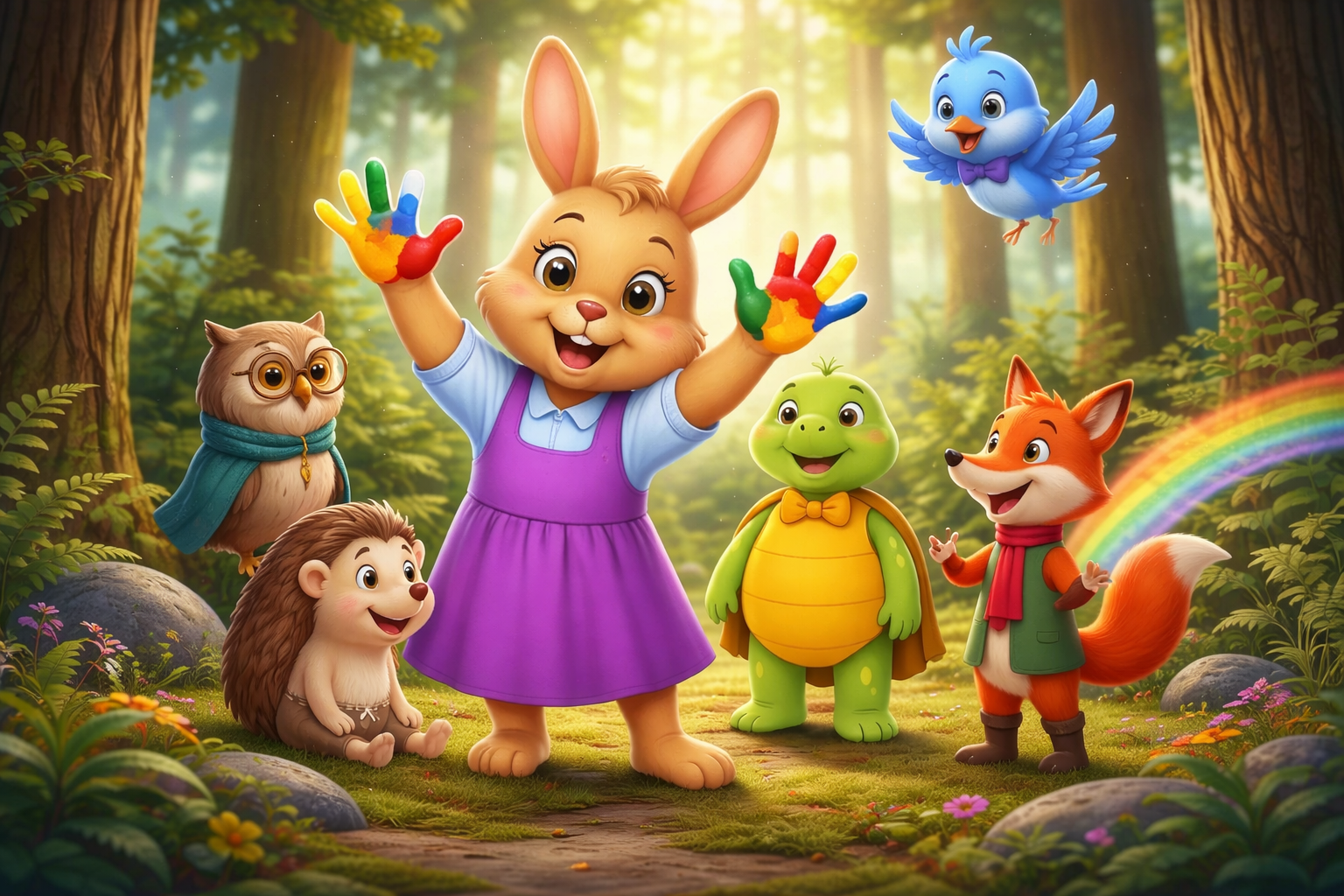
At YouMatterLuma, we believe that every child needs to read stories that will not only enrich their mind but also help them understand the value of his/her existence. Written by award-winning author John R. Miles, the You Matter Series tells the story of Luma the Bunny and her animal friends and introduces kids to complex emotions in a gentle way.
Emotional intelligence refers to the capability of a child in being able to comprehend his/her own feelings and display empathy to other people. Intelligence quotient is an indicator of how a child understands logical and factual information, but it does not take into account the ability of a child to handle setbacks, share, and recover from tough days. That is why emotional intelligence is important for children.
According to recent development studies, the part of a child’s brain involved in emotions develops faster than the part of the brain related to abstract thinking. This is the exact reason why emotional coaching impacts a child’s future more than academic coaching.
The reasons that make emotional intelligence so significant in the development of children can enable parents to look beyond their children’s grades and into the realm of emotions and connection.
Children with well-developed emotional skills adapt easily to change, handle disappointment better, and develop friendships with reduced instances of conflict. Moreover, they generally do well in school because a child who is emotionally regulated learns better than an anxious one.
Comparison of emotional intelligence vs. IQ in kids reveals that the two play quite different roles in the development of a child:
Developing emotional intelligence skills for kids does not need a curriculum; it only needs some simple practices that can be done on a regular basis:
Such simple activities practiced frequently will develop the emotional vocabulary and self-control much better than any explanation can do.
One of the easiest and most effective methods of teaching children about difficult emotions is reading. Quality children’s emotional development books make these emotions tangible and easy to explore.
Books from the You Matter Series have this goal precisely in mind. In these stories, each of them is dedicated to an emotional topic, Luma the bunny acts as an ambassador of the feelings involved:
All ten stories combined create a gentle universe, called Matteringverse, where the reader will be able to explore their emotions and understand that they matter.
Currently, the best intelligence books for kids are not simply puzzle or flashcard books but are those that include stories with emotional lessons to teach children.
This is because children will remember stories based on emotions more easily compared to when they learn facts alone. Combining an excellent collection of emotional intelligence books for kids, including the You Matter series, with discussions on emotions will enable them to have a balanced approach.
While traditional methods such as flash cards, puzzles, and worksheets help develop cognitive skills, they fail to show a child how to cope with disappointment or how to console a friend who is sad. The storybooks make up for this deficit by providing an emotional framework to a situation that a child can relate to, making it more tangible than any worksheet.
If parents combine educational teaching with storytelling, they enable their children to become better-rounded individuals, those who will not only perform well in their studies but also be successful in maintaining friendships and coping with failure and change.
IQ will always be important, but emotional intelligence will help determine how that IQ is put to use: compassionately, resiliently, and with confidence. Each night before bed provides another opportunity to plant this seed.
At YouMatterLuma, John R. Miles and the You Matter series provide the reminder, one soothing story at a time, that each individual matters just for being who they are and not for their accomplishments.
Ready to give your child an experience that enriches both their heart and mind? Order You Matter, Luma now!
It is possible to coach kids on emotions as young as toddlers. Basic strategies like labeling feelings and reacting calmly can be started at age 2-3, and using picture books can facilitate it for ages 4-8.
The answer is yes, and a child may be very intelligent while being frustrated, empathic, or socially challenged, for instance, making the emotional coaching necessary along the way to education, rather than following the latter.
A tendency to have meltdowns when experiencing minor frustrations, difficulties in making friends, or labeling his/her feelings can be indications that he/she needs more coaching on emotions.
Repeating the reading of related stories that contain a lot of emotional content will enable children to identify their emotions and name them, which will be the first step towards self-regulation. Reflection after the reading process is even more useful than just reading.
There are SEL classes at many schools because the connection between emotional skills and behavior at school, attention, and relationships with peers was found in the studies, not just at home.