

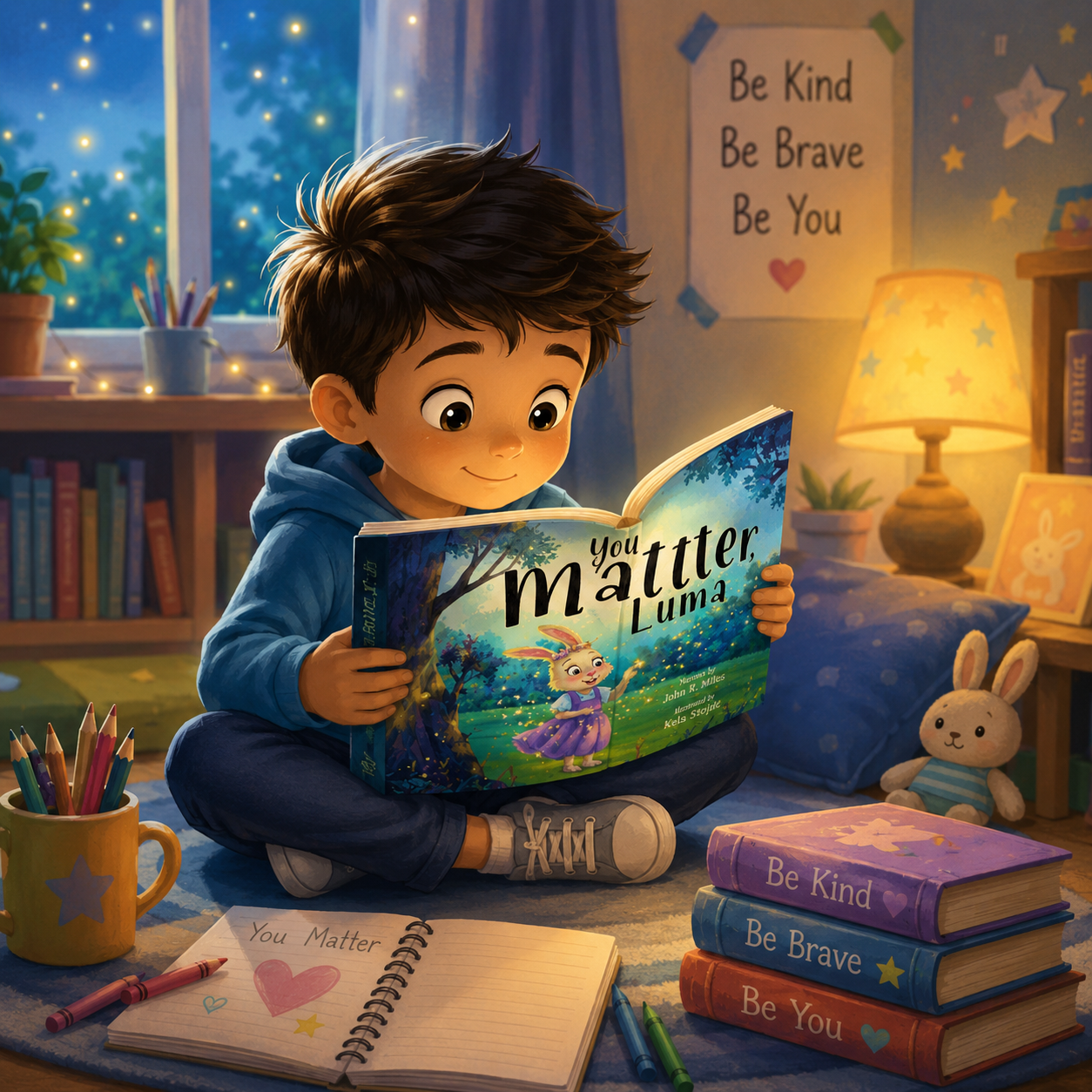
Kids learn best when they experience something, and storytelling strikes that emotional center directly. In fact, it’s one of the most powerful tools to teach children to recognize, understand, and manage their emotions. The stories are composed of recognizable characters facing real-life emotions, creating an environment where children can safely experience their emotions without being criticized. The best emotional intelligence books for kids are what the people are searching for. Learning through narrative enables a deeper emotional growth than worksheets or lectures ever could.
At You Matter Luma, we understand that children need the necessary means to excel emotionally and socially. We have put together the necessary resources to ensure that emotional learning is fun, accessible, and relevant. As a parent, educator, or caretaker, You Matter Luma will be your guide in nurturing emotionally strong children.
EQ can be defined as the ability to understand and manage your own emotions and be empathic towards others’ emotions as well. It has been discovered through research that emotionally intelligent children tend to excel academically as well as socially and also cope with stress effectively.
As opposed to IQ, which is a stable measure of intellectual abilities, emotional intelligence is malleable and learnable. This is precisely what makes storytelling such an incredible tool.
Stories allow for an experience of emotions without any consequences in the real world. The child is free to explore the feeling of jealousy, fear, or sadness of a character, which allows one to gain experience without consequences, and it is called “narrative empathy.” According to contemporary research on AI-driven literacy, reading stories triggers the same neural pathways involved in emotional experiences.
Let us take a look at what storytelling does for the EQ of a child:
The fact is, not all stories can help kids enhance their EQ skills. Some are better than others.
Look for stories that have:
If a kids’ emotional intelligence book has all these elements, it will be much more useful than just entertaining for your kid.
Parents can help children develop emotional intelligence skills without being inside a classroom; the living room, during bedtime, or while traveling in the car could be just fine. The important thing is to make storytelling interactive. Here are some ideas to use when telling stories:
Teaching professionals have always known that the art of storytelling plays a vital role in social-emotional learning (SEL). A kids’ emotional learning storybook has the power to become an educational tool just like the curriculum itself when implemented correctly.
Here are some useful ideas for implementation:
These kinds of intelligence books for children have such plots to start with.
When a child who is struggling emotionally identifies with a character who is going through something similar, they often open up in ways that direct questioning never could. The story does the work, and the child needs only to watch and listen and feel.
That’s why storytelling is so effective with emotionally guarded children:
Child psychologists and SEL researchers increasingly recommend narrative-based approaches for children with anxiety, trauma histories, or emotional regulation challenges.
It is not perfection that makes teaching emotional intelligence possible but presence. Introducing a child to a book where they can experience emotions together with the characters featured in it means gifting them an immensely valuable life skill. The right book at the right time may have the power to change how a child perceives themselves, other people, and their environment.
Selecting the best intelligence books for kids can prove to be the single most meaningful investment in their emotional futures. It could not have been easier, and all the information about what constitutes a quality resource is right here at You Matter Luma.
You may begin at ages 2 to 3 with picture books that introduce simple emotions such as happiness, sadness, or fear.
Reading or storytelling even once a day for 10 to 15 minutes could significantly develop their emotional intelligence and empathy.
While it is possible, storytelling is better used as an adjunct activity alongside an SEL program rather than replacing it entirely.
Those that feature characters that experience life-like events and find ways to cope positively with their emotions are bound to be successful.
The conversation you have with your child may matter more than the book itself.