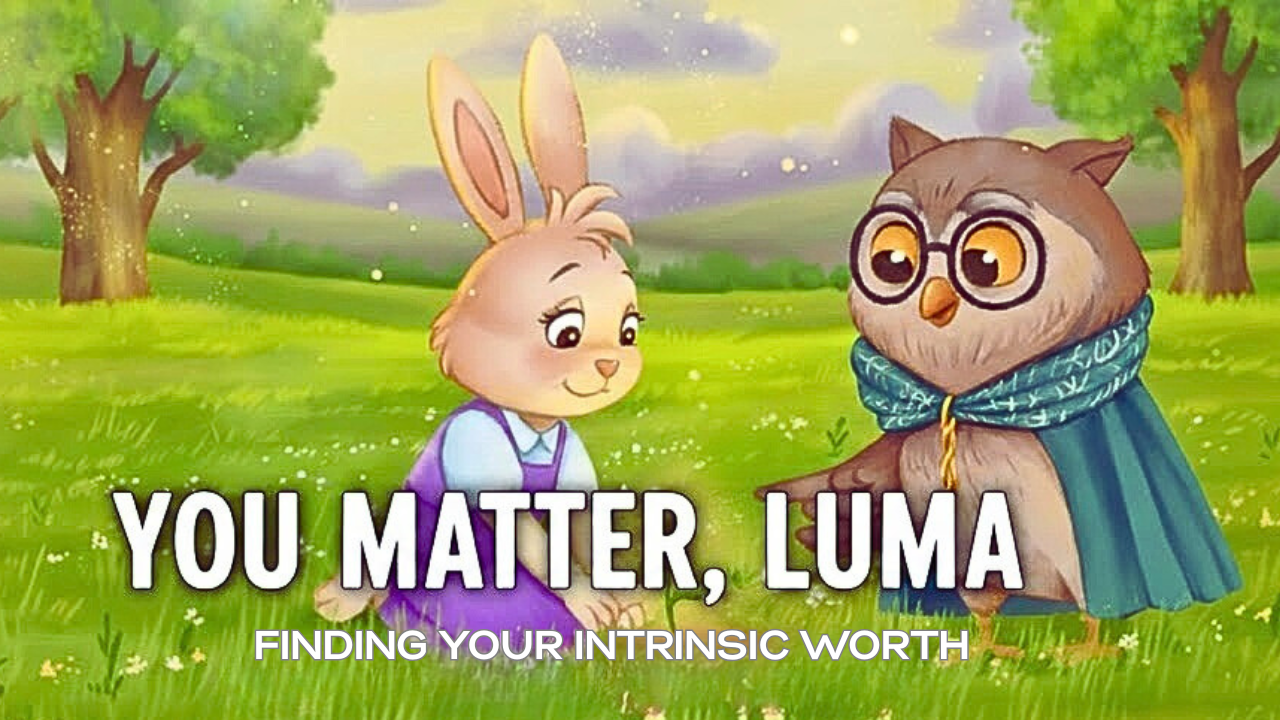
Ever wonder what makes You Matter Luma more than just a sweet bedtime story?
This isn’t a typical children’s book with a simple moral at the end. It is a thoughtfully crafted tool—grounded in child development research and brought to life through beautiful illustrations—specifically designed for building emotional strength in kids ages 3–8. Spread by spread, the story reveals how young minds process feelings of invisibility, discover inherent worth, and learn the power of their own presence and kindness.
As an author, I wrote this book from a deeply personal place: my own childhood experience of feeling unseen after a traumatic brain injury at age five. But the science behind it draws from affective neuroscience, developmental psychology, positive psychology, attachment theory, and more. These insights are woven into Luma’s journey so children experience these ideas viscerally, not just hear about them.
Here’s a look at how the story unfolds and how it serves as a roadmap for building emotional strength in kids.
Chapter 1: The Feeling of Invisibility (Spreads 1–2)
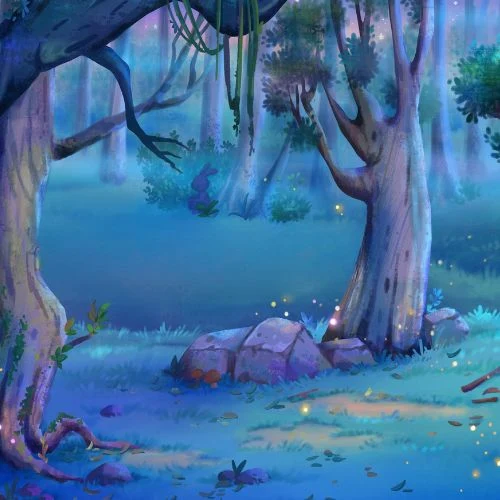
The story opens in the vibrant, mystical Passion Struck Forest. Every creature—from ants to birds—has a clear role and purpose. Luma, a small bunny, watches it all and feels deeply small and purposeless. She wonders if she even matters, or if she simply hasn’t discovered her “gift” yet.
- Plot: Luma observes the bustling forest and grapples with self-doubt, believing her value depends on having a special job or talent.
- The Science: This spread captures the silent ache of anti-mattering—the painful feeling of being unseen or insignificant. It illustrates conditional worth and “social pain,” which registers in the brain similarly to physical pain. By naming Luma’s invisibility openly, the text supports CASEL’s self-awareness competency, a pillar in building emotional strength in kids.
- The Art: Reduced contrast and desaturation surround Luma, making her appear isolated amid the sharp forest. Oliver the owl perches high as a “wise witness,” signaling he sees what Luma cannot yet see in herself.
- Impact: Children see what “being unseen” feels like visually, opening conversations about how presence alone has value.
Chapter 2: The Lesson of Intrinsic Worth (Spreads 3–4)
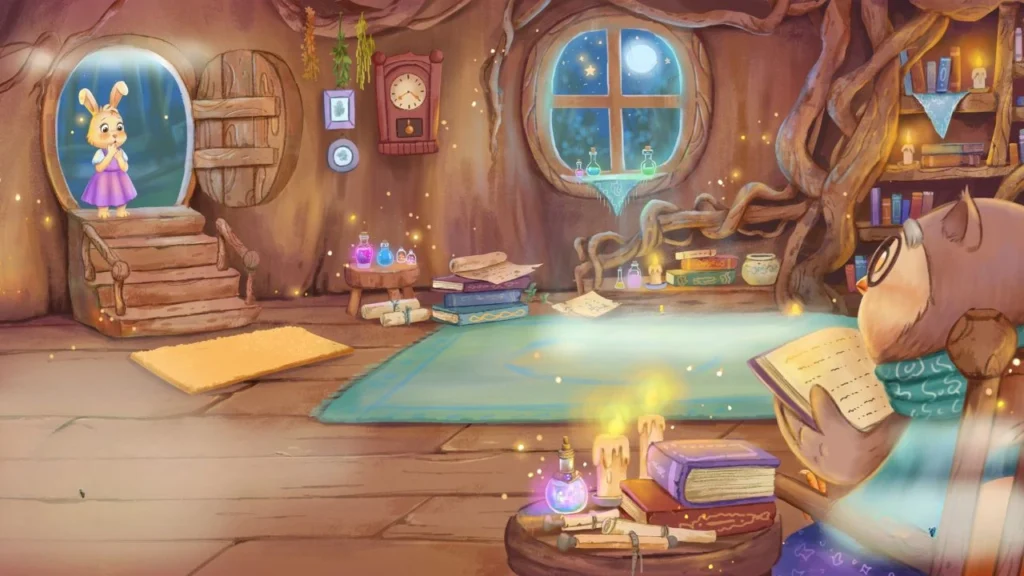
Luma takes her first brave step: entering Oliver’s glowing tree to ask, “Do I even matter?” Instead of assigning a task to “earn” value, Oliver shows her that some things shine simply because they exist. Gazing at a tiny sprout, Luma whispers her pivotal realization: “I matter because I am me”.
- Plot: Oliver gently reframes worth as inherent. Luma experiences her first internal shift.
- The Science: This draws from self-efficacy, emergent identity, and internal locus of value—teaching that self-worth isn’t a reward but something carried inside.
- The Art: Luma’s posture evolves from curled-in to active curiosity. Warm lighting inside the tree signals safety, while glowing clouds make abstract ideas like “potential” feel tangible.
- Impact: Shows that small shifts in body and emotion lead to confidence, making inner growth feel real for young readers.
Chapter 3: The Mechanics of the Ripple (Spread 5)
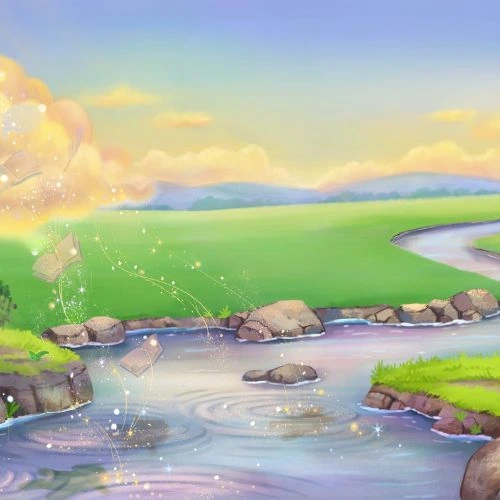
Oliver leads Luma to a shimmering brook. A single touch sends ripples outward, stretching far beyond sight. Luma begins to grasp her own agency: her voice and actions aren’t static, they flow and touch others long after they are shared.
- Plot: Witnessing ripples, Luma realizes she can be a “cause” with real “effect”.
- The Science: Introduces agency and prosocial ripple effects. When kids see their actions matter, they are more likely to engage in kindness.
- The Art: Water’s movement is a tangible metaphor for impact. A golden thought bubble connects her earlier “dream” to this external reach.
- Impact: Makes “impact” visible. Luma shifts from an “invisible bunny” to a storyteller with power.
Chapter 4: The Courage to Be Seen (Spreads 6–7)
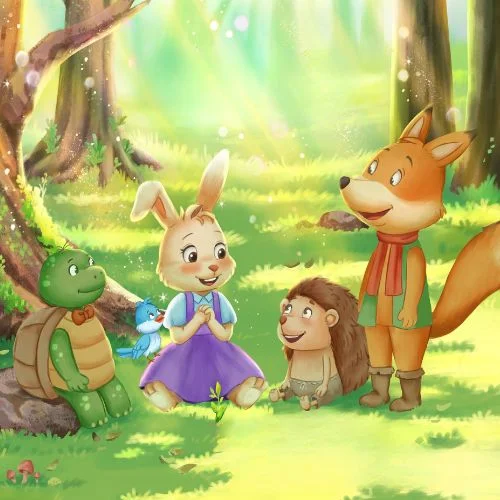
Empowered, Luma returns to her peers. For the first time, she shares her stories actively. She sees their “shining eyes” and realizes her presence makes the forest brighter for everyone.
- Plot: Luma moves from observer to contributor, witnessing reciprocity.
- The Science: Secure attachment and mirror neurons activate here. Feeling seen by friends reinforces a child’s sense of belonging.
- The Art: Friends’ glowing responses mirror Luma’s growing light—visual proof that connection amplifies worth.
- Impact: Builds relationship skills (CASEL) and shows that mattering is a two-way street of giving and receiving.
Start the Ripple Today
This gentle progression—from isolation to belonging—is a vital part of building emotional strength in kids. Aligned with CASEL’s SEL competencies, You Matter, Luma is a straightforward tool for classrooms, homeschooling, or family reading. After the story, try the Pass the Ripple challenge: one small act of kindness creates ripples that spread far.
Every child deserves to know they matter—not because of what they do, but because of who they are. If you’d like to bring this journey home, visit youmatterluma.com to learn more, order, or explore resources.